
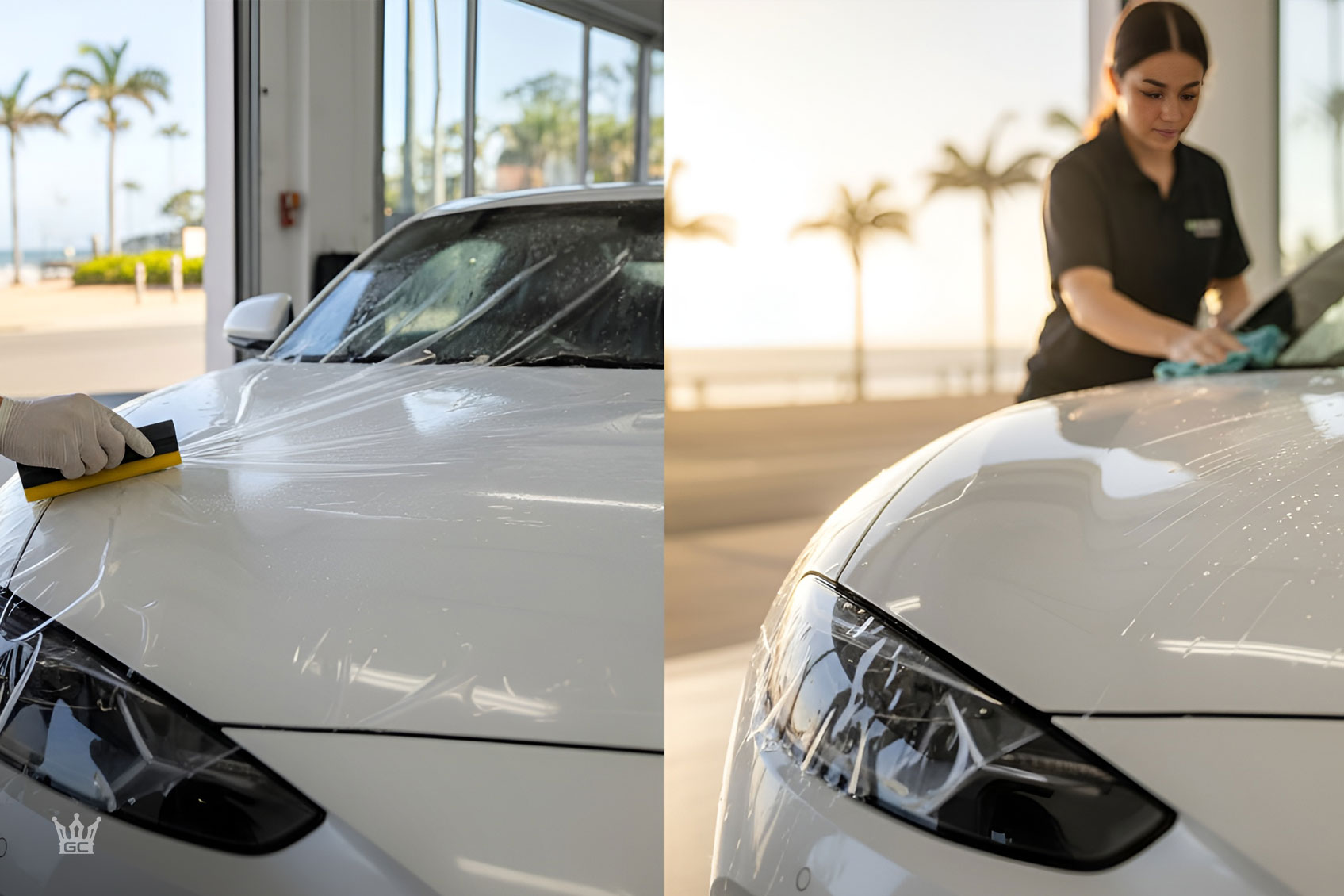
So, you’ve just brought home a new car, and its paint is perfect. But living on the Gold Coast, you know the threats are real: the intense Queensland sun, surprise roadworks on the M1, bird droppings, and salty air. How do you keep that showroom shine? The two leading technologies are Paint Protection Film (PPF) and Ceramic Coatings, and the best choice depends on your primary goal.
For ultimate defense against physical damage like rock chips and scratches, Paint Protection Film is the clear winner. For incredible gloss, UV protection, and effortless cleaning, a Ceramic Coating is the ideal solution. This guide breaks down the pros and cons of both so you can make a confident choice for your car.
What is a Ceramic Coating?
Think of a ceramic coating as a super powered, semi permanent version of wax. It’s a liquid polymer, usually silica based, that a professional applies to your car’s paint. Through a chemical reaction, it bonds with your car’s clear coat to form an ultra thin, rigid, and transparent protective layer.
This “nano ceramic” shell is incredibly hydrophobic, meaning it repels water, dirt, and grime like nothing else. Water beads up and rolls right off, taking dirt with it. This makes your car stay cleaner for longer and makes washing a breeze. It also provides a strong shield against UV rays, which cause paint to fade and oxidize, and chemical stains from things like bird droppings and tree sap. While it adds a beautiful, deep gloss, it’s important to know it’s not designed to stop physical damage like rock chips.
-
Fact: A quality ceramic coating can maintain over 97% of a car’s original gloss after 7 years in manufacturer tests, thanks to its powerful UV blockers.
Pros of Ceramic Coating
-
Amazing Gloss and Shine: It enhances your paint’s depth, creating a rich, wet look that outshines traditional waxes.
-
Easier Cleaning: The hydrophobic surface means dirt and grime have a hard time sticking. Washing your car becomes faster and less frequent.
-
Chemical and UV Resistance: It acts as a barrier against acidic contaminants like bird droppings and bug splatter, preventing them from etching into your clear coat. It’s like sunscreen for your paint.
-
Long Lasting Protection: A single professional application can last for years (typically 2 to 5), far longer than the few weeks you get from a traditional wax.
Cons of Ceramic Coating
-
No Impact Protection: This is the big one. A ceramic coating is microns thin and will not stop rock chips, deep scratches, or parking lot scuffs.
-
Requires Professional Application: To get a flawless finish, the paint must be perfectly prepped and polished. Mistakes during application can lead to high spots or streaks that are difficult to remove.
-
Maintenance Is Still Needed: It’s low maintenance, not zero maintenance. You still need to wash your car regularly with pH neutral soaps and avoid abrasive automatic car washes.
-
Higher Upfront Cost (Than Wax): Professional application is a detailed process, and the price reflects that, typically costing over a thousand dollars.
What is Paint Protection Film (PPF)?
Paint Protection Film (PPF), also known as a clear bra, is the heavyweight champion of paint protection. It’s a thick, transparent, and durable urethane film that is physically applied to your car’s body panels. Think of it as a screen protector for your car’s paint.
-
Fact: A typical PPF is about 8 mils (200 microns) thick, which is more than 100 times thicker than a ceramic coating.
Its main job is to absorb the impact from rocks, gravel, road debris, and even minor scuffs, leaving your factory paint untouched beneath. Modern high end films are virtually invisible, optically clear, and won’t yellow over time. The most amazing feature? Many premium films have a “self healing” top coat. Light scratches and swirl marks will literally disappear with a bit of heat from the sun or warm water.
Pros of PPF
-
Unmatched Impact Protection: This is the best defense against rock chips, scratches, scuffs, and road debris. It’s a true sacrificial shield for your paint.
-
Self Healing Properties: Minor swirls and light scratches on the film vanish with heat, keeping the surface looking smooth and glossy for years.
-
Virtually Invisible: When installed by a professional, a quality clear PPF is nearly impossible to spot, preserving your car’s original look.
-
Long Term Durability: Top tier films often come with warranties of up to 10 years, offering long lasting peace of mind.
-
Finish Options: You can choose a standard high gloss film to match your paint or a satin film to transform your glossy car into a trendy matte finish.
Cons of PPF
-
High Initial Cost: PPF is a significant investment. A full front installation can cost a couple of thousand dollars, and a full body wrap can be several times that.
-
Installation is Key: A poor installation can result in bubbles, peeling edges, or even knife marks on the paint. You need a skilled and experienced installer for a perfect result.
-
Potential for Visible Edges: Because it’s a physical film, there will be edges. A good installer hides them along body lines, but they can sometimes collect a bit of dirt over time.
-
Can Be Damaged: A very sharp or heavy impact can still puncture the film. While your paint is likely safe, the damaged film section will need to be replaced.
What’s the Real Difference Between PPF and Ceramic Coating?
The simplest way to think about it is this: PPF protects against physical damage, while ceramic coating protects against environmental and chemical damage.
PPF is like armor. It’s a thick, flexible barrier that stops rocks and prevents scratches. A ceramic coating is like a high tech, durable raincoat. It makes water and dirt slide off, protects against UV rays, and adds a brilliant shine, but it won’t stop a physical impact. They are two different tools for two different jobs, which is why figuring out the best options for protecting new car paint Gold Coast ppf or ceramic coating depends on understanding your specific risks.
Protection Comparison
-
For Rock Chips and Scratches: PPF is the undisputed winner. It is designed specifically to absorb and deflect physical impacts that would otherwise chip or scratch your paint. A ceramic coating offers almost no protection in this area.
-
For Chemical Stains and UV Fading: Ceramic coating has the edge. Its chemically inert surface provides superior resistance to etching from bird droppings and bug splatter. Its UV inhibitors are excellent at preventing paint oxidation and fading from the harsh Gold Coast sun.
Durability and Longevity Comparison
-
PPF: Generally lasts longer. A quality film is often warrantied for 5 to 10 years and can easily last that long with proper care.
-
Ceramic Coating: Typically lasts 2 to 5 years before its performance (like water beading) starts to decline and it may need to be reapplied.
Maintenance and Upkeep Comparison
-
Ceramic Coating: Wins for ease of cleaning. The incredible hydrophobic properties mean the car stays cleaner longer and is significantly easier to wash.
-
PPF: Requires normal washing. While its self healing properties can forgive minor wash swirls, it doesn’t have the same “self cleaning” effect as a coating. However, maintaining it means you will likely never have to deal with paint chip touch ups.
Cost Comparison
-
PPF: Is the more expensive option. A full body wrap is a major investment, though you can protect high impact zones like the front end for a more moderate price.
-
Ceramic Coating: Is more budget friendly. A full vehicle professional coating costs significantly less than a full PPF wrap, offering a great value for the gloss and ease of maintenance it provides.
Aesthetic Differences
-
Ceramic Coating: Is all about enhancing appearance. It adds a deep, candy like gloss that makes paint pop.
-
PPF: Is designed to be invisible and preserve the factory look. However, it also offers the unique ability to change your car’s finish to satin or matte (see this satin PPF transformation on a Land Rover Defender).
Which is Better: PPF or Ceramic Coating for Your Gold Coast Car?
This isn’t a one size fits all answer. The better choice depends entirely on your driving habits, budget, and priorities.
Choose PPF if: Your primary concern is preventing physical damage. If you do a lot of highway driving, live on a gravel road, or simply can’t stand the sight of rock chips, PPF is the only real solution. It provides the peace of mind that your original paint is safe from the daily grind.
Choose Ceramic Coating if: Your main goal is a stunning appearance and easier maintenance. If you mostly drive in the city, want your car to have an incredible shine, and hate spending hours washing it, a ceramic coating is a fantastic choice. It excels at keeping your car looking like it was just detailed.
Ultimately, the best options for protecting new car paint Gold Coast ppf or ceramic coating are the ones that solve your biggest problems.
The Best of Both Worlds: Combining PPF and Ceramic Coating
Why choose one when you can have both? Many car enthusiasts and detailing professionals agree that the ultimate solution is to combine the two.
You can apply a ceramic coating directly on top of Paint Protection Film. This hybrid approach gives you a multi layered defense system:
-
PPF provides the heavy duty armor against chips and scratches.
-
Ceramic Coating adds the glossy, hydrophobic top layer for easy cleaning and chemical resistance.
This combination is extremely popular. A common strategy is to install PPF on the most vulnerable, high impact areas of the car (like the full front bumper, bonnet, fenders, and mirrors) and then apply a ceramic coating over the entire vehicle, including the film. You get bulletproof protection where you need it most and incredible gloss and ease of cleaning everywhere. This is often the most recommended of the best options for protecting new car paint Gold Coast ppf or ceramic coating.
If you’re looking for this ultimate setup, the experts at Gold Coast Wrap Kings can create a custom package for your vehicle, ensuring seamless application of both technologies.
Finding Your Perfect Match: Which Option Fits Your Needs?
Let’s look at a few common scenarios for Gold Coast drivers:
-
The Daily Highway Commuter: You’re on the M1 every day. Recommendation: A “full front” PPF package is essential to stop the inevitable rock chips. Combine it with a full vehicle ceramic coating to make washing off bug splatter and road grime effortless.
-
The EV Owner (Tesla, BYD): Electric vehicles often have large, smooth panels and sometimes softer paint. Recommendation: A hybrid approach is perfect. Get PPF on the front end and rocker panels (which are prone to rock spray from the front tires). Then, ceramic coat the entire car for that sleek, futuristic shine and easy maintenance. Explore recent EV protection projects for ideas.
-
The Luxury or Sports Car Enthusiast: You want to preserve your investment and keep it looking flawless. Recommendation: Go for the ultimate combo. A full body PPF wrap will protect every panel from damage, and a ceramic coating on top will provide that show winning gloss. For priceless vehicles, this is the gold standard (see how we protected a Ferrari 488 GTB with premium PPF).
-
The Off Road Adventurer: Your 4×4 sees bush tracks and gravel roads. Recommendation: PPF is a must have. It will defend against branch scratches (“pinstripes”) and stone chips. A ceramic coating on top will make cleaning off mud and red dirt much easier. For more tips, see our guide to bush wraps and off‑road paint protection.
-
The City Driver: You stick to suburban streets and your main concerns are the sun, birds, and keeping the car looking sharp. Recommendation: A professional ceramic coating is likely all you need. It provides excellent UV and chemical protection and makes your car look amazing with minimal effort.
Frequently Asked Questions
Absolutely. It’s a very common and recommended practice. The ceramic coating adds hydrophobicity and extra gloss to the PPF, making it easier to clean and enhancing its appearance.
PPF generally lasts longer. A high quality film often has a warranty of up to 10 years, whereas most ceramic coatings last between 2 and 5 years before needing reapplication.
For a new Tesla on the Gold Coast, the most popular and effective solution is a combination. Installing PPF on the full front end and rocker panels prevents chips in the famously soft paint, while a ceramic coating over the entire car provides UV protection and makes cleaning a breeze. Our team is experienced with Tesla sensors and cameras, ensuring clean installs that don’t interfere with safety systems.
Yes, but you should use proper technique. Hand washing with a pH neutral soap and a soft microfiber mitt is best for both. Avoid automatic car washes with harsh brushes, as they can damage both coatings and film over time. For specifics, follow our step‑by‑step PPF washing guide.
For most new car owners, yes. Both options protect your car’s resale value by keeping the factory paint in pristine condition. PPF can save you thousands in repaint costs, while a ceramic coating saves you hundreds of hours in maintenance over the life of your car.
Deciding between the best options for protecting new car paint Gold Coast ppf or ceramic coating comes down to an honest look at your budget, driving habits, and what you value most. Whether you choose the physical armor of PPF, the brilliant shield of a ceramic coating, or the ultimate hybrid solution, you’re making a smart investment in your vehicle.
Ready to give your car the protection it deserves? The team at Gold Coast Wrap Kings are local experts in both PPF and vehicle wraps. Contact us today for a personalized consultation and find the perfect protection package for your ride.