
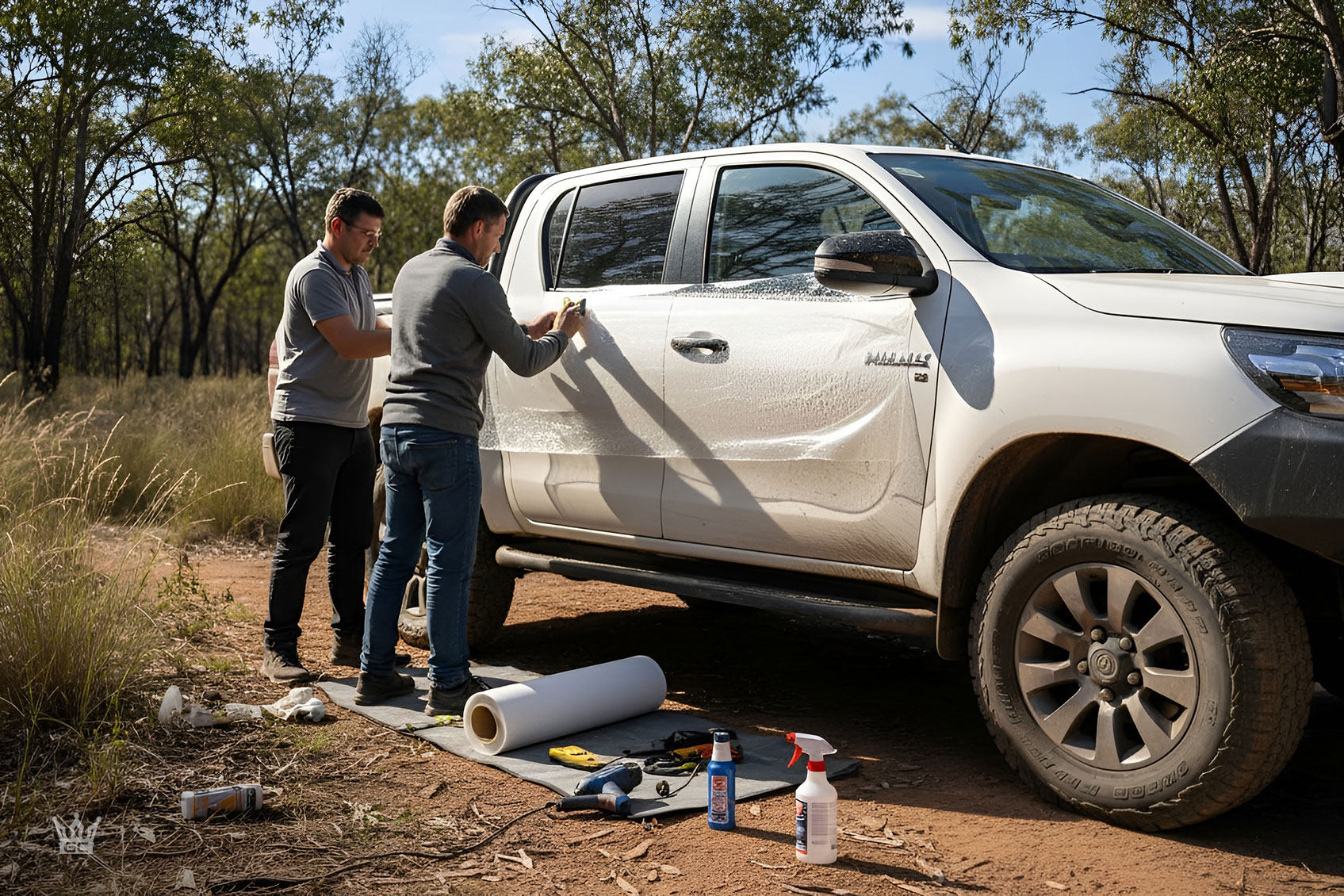
Heading off the beaten track is one of the great joys of owning a 4×4, but the Australian bush can be tough on your vehicle’s paintwork. Those tell-tale scratches from branches, often called “bush pinstripes,” can quickly make a new truck look old. Luckily, there’s a DIY solution. Bush wrap kits for 4x4s are sets of pre-cut, transparent paint protection film (PPF) designed to shield the most vulnerable areas of your vehicle. This guide explains everything you need to know about what are bush wrap kits for 4x4s and how to install them, giving you the confidence to protect your investment before your next adventure. For a broader off‑road overview, see our bush wraps ultimate off‑road paint protection guide.
As Gold Coast’s trusted vehicle protection specialists, we at Gold Coast Wrap Kings get these questions all the time. Let’s dive in.
What Exactly is a 4×4 Bush Wrap Kit?
A bush wrap kit is a DIY paint protection solution designed specifically for 4x4s. It consists of pre cut pieces of tough, transparent paint protection film (PPF) that you apply to the most vulnerable areas of your vehicle, like the doors, fenders, and quarter panels.
This isn’t just any old film. It’s made from a high grade, optically clear thermoplastic polyurethane (TPU), the same material used in professional, high end vehicle protection. Once applied, it’s nearly invisible, so it protects your 4×4 from scratches, scrapes, and stone chips without changing its appearance. The main appeal is that it offers an affordable and accessible way to get serious paint protection without the cost of a full professional wrap.
What’s Inside a Pre-Cut Bush Wrap Kit?
When you open a bush wrap kit, you’ll find everything you need to get the job done. The key component is the set of computer cut PPF templates, which are precisely shaped to fit your specific 4×4 model. This means no risky cutting on your car’s paint.
A typical kit includes:
-
Pre-cut PPF Panels: Film pieces perfectly sized for your vehicle’s doors, fenders, and other high impact zones.
-
Slip Solution Concentrate: A small bottle of soap concentrate that you mix with water. This creates the slippery solution needed to position the film.
-
Application Squeegee: A small, flexible tool used to smooth the film and push out water from underneath.
-
Test Piece: A small scrap of PPF for you to practice with, so you can get the hang of the technique before starting on the main panels.
-
Installation Guide: A set of instructions, often with a link to helpful video tutorials.
How to Install Bush Wrap Kits for 4x4s: A Step by Step Guide
Installing a bush wrap kit is a methodical process that uses a “wet application” technique. While it requires patience, it’s definitely achievable for a first timer. Understanding what are bush wrap kits for 4x4s and how to install them properly is key to a great result.
Step 1: Prepare Your Vehicle and Environment
First things first, your installation environment is critical. You should always work indoors or in a well shaded, wind free area. Applying the film in direct sunlight can cause the adhesive to activate too quickly, making it difficult to position.
The ideal temperature range for installation is between 15°C and 27°C. This ensures the film is pliable and the adhesive cures correctly. Most importantly, the space must be clean and dust free, as even a single speck of dirt can get trapped under the film and create a noticeable bubble.
Start by giving your 4×4 a thorough wash to remove all dirt, wax, and contaminants. A clean surface is non negotiable for good adhesion.
Step 2: Mix Your Slip Solution and Practice
Mix the provided slip solution concentrate with water in a spray bottle as per the instructions. If no concentrate is provided, a simple mix of 2 ml to 4 ml of Johnson’s Baby Shampoo per 1 liter of DI or filtered water works perfectly. This solution allows the film to “slip” or float on the panel, giving you time to position it.
Before you touch any of the main panels, grab the test piece. Spray a clean surface (like a window or a small painted area) and the test film with your slip solution. Practice applying it and using the squeegee to get a feel for the process. This small step builds a huge amount of confidence.
Step 3: The Wet Application Method
The secret to a successful PPF installation is using plenty of water. You can’t really use too much. Liberally spray the vehicle panel you’re working on with the slip solution. Then, peel the backing off the corresponding PPF piece and spray the adhesive side thoroughly as well. This generous layer of water is what allows you to slide the film around for perfect placement without it sticking prematurely.
Step 4: Panel Alignment and Squeegee Technique
Carefully lay the wet film onto the wet panel. Since it’s floating on the slip solution, you can gently slide it into position. Align the film with the body lines, edges, or emblems on the panel. The pre cut pieces are designed to fit, so take your time to get the alignment just right.
Once you are happy with the position, it’s time to use the squeegee. Start in the center of the panel and work your way outwards to the edges. Use firm, overlapping strokes to push the water and air bubbles out from under the film. This methodical, center out technique ensures you don’t trap any pockets of air or water.
Pro Tips and Important Considerations
Getting a professional finish on your DIY install often comes down to a few extra details. For anyone learning what are bush wrap kits for 4x4s and how to install them, these tips are invaluable.
Should I Get a Friend to Help?
While you can certainly install a kit by yourself, having a second person can be a huge help, especially when handling larger pieces like those for the doors. One person can hold the film steady while the other positions and squeegees. This is a great way to simplify the process and reduce the chance of errors.
How Long Does Installation Take?
For most DIY installers, a complete bush wrap kit takes about two to four hours to apply. If it’s your first time, it’s wise to set aside an afternoon to work slowly and carefully. For example, one review of a DIY installation on a large 4×4 found it took about 10–12 hours over two days to complete, so there’s no need to rush.
Understanding Coverage Gaps at Panel Edges
You might notice that the pre cut film pieces don’t go all the way to the absolute edge of the panel. This is intentional. Leaving a tiny margin (often just 1 to 3 millimeters) makes the installation much easier and dramatically reduces the risk of the film lifting or peeling over time. Templates are designed to prioritize a safe, simple install over absolute edge to edge coverage.
Why Professional Help is Smart for Bonnets and Bumpers
While side panels are straightforward, larger and more complex areas like the bonnet and front bumper are significantly more challenging. Applying a huge sheet of film to a bonnet without trapping debris or creating creases requires advanced techniques. Bumpers, with their tight curves and recesses, are even trickier. For a real‑world example, check out our Ford Ranger satin PPF full wrap.
For this reason, if you want protection on these high impact front facing areas, it’s often best to leave it to the professionals. They have the tools and experience to ensure a flawless result. If you’re on the Gold Coast and want perfect coverage on your bonnet or bumper, the team at Gold Coast Wrap Kings can get it done right. Get in touch to book a professional install.
All About the Film Itself: Properties and Care
The material used in these kits is pretty incredible. Understanding its properties helps you get the most out of your investment.
The Magic of Self Healing TPU
Modern PPF is made from a material called Thermoplastic Polyurethane (TPU) that has a remarkable self healing property. Light scratches and swirl marks on the film’s surface will actually disappear when exposed to heat, like from the sun or by pouring warm water over the area. The film’s top layer essentially reflows to its original smooth state, keeping your 4×4 looking fresh.
How to Safely Remove Your Bush Wrap
When it’s time to remove the film, heat is your best friend. Warming the film with a heat gun (on a low setting) or even by pouring hot water over it softens the adhesive, allowing the film to be peeled off gently and cleanly. Never try to rip the film off when it’s cold, as this can damage the paint’s clear coat.
Cleaning and Maintaining Your PPF
Maintaining your PPF is easy. Follow our step‑by‑step guide to cleaning PPF. You can wash your vehicle as you normally would, preferably by hand with a soft mitt and a pH balanced car shampoo. It’s best to avoid abrasive brushes or harsh chemicals. You can use a pressure washer, but keep the nozzle at a safe distance and avoid spraying directly at the film’s edges.
Safe (and Unsafe) Detailing Products for PPF
Most modern car care products are perfectly safe for PPF. This includes spray detailers, spray waxes, and even ceramic coatings. Applying a ceramic coating over your PPF is actually a fantastic way to add extra gloss and make cleaning even easier.
You should avoid products containing high concentrations of petroleum distillates, like some old school paste waxes or aggressive tar removers, as they can damage the film’s adhesive over time. Stick to gentle, paint safe products.
UV Protection: Sunscreen for Your 4×4
The intense Australian sun can cause paint to fade and oxidize over time. PPF acts like sunscreen for your vehicle, providing a sacrificial barrier that absorbs the brunt of harmful UV radiation (see our guide to what paint protection film is, coverage, and care). This helps keep the paint underneath looking vibrant and new for years to come, protecting your 4×4’s value.
PPF vs. The Alternatives
It’s common to wonder how a bush wrap kit compares to other options.
-
Paint Protection Film (PPF): This is your number one choice for physical impact protection. The thick urethane film is designed to absorb rock chips and prevent scratches. It is the best defense against the kind of damage you get off road.
-
Ceramic Coating: This is a liquid polymer that creates a thin, hard, glass like layer on your paint. It offers great chemical and UV resistance and makes your car incredibly glossy and easy to clean. However, it does not stop rock chips or deep scratches.
-
Vinyl Wrap: This is a thinner film used primarily to change your car’s color or add custom graphics. While it provides a small amount of protection from minor scuffs, it is not designed to withstand impacts like PPF can. A vinyl wrap is for looks, while PPF is for pure protection.
If you are unsure which solution is best for your needs, the experts at Gold Coast Wrap Kings can walk you through the options and help you find the perfect fit for your vehicle and budget.
What if a Panel Gets Damaged?
Don’t worry. If you damage a single piece of film during installation or out on the trail, you don’t have to buy a whole new kit. Most suppliers can provide individual replacement panels. Because the patterns are stored digitally, they can cut just the piece you need, saving you time and money.
Frequently Asked Questions about what are bush wrap kits for 4x4s and how to install them
The main purpose is to protect your 4×4’s paint from scratches, scrapes, and chips caused by branches, rocks, and general off road use, keeping your vehicle looking newer for longer.
Yes. The kits are designed for DIY installation. With a clean environment, patience, and by following the instructions (especially practicing with the test piece), most people can achieve a great result.
Small water bubbles will often evaporate and disappear on their own over a few days as the film cures. For a trapped air bubble, you can sometimes use a very fine pin or the provided tool to prick it and gently press the air out.
No. When removed correctly using heat, high quality PPF will not damage your vehicle’s original factory paint. It’s designed to be fully and safely removable.
A quality bush wrap kit, depending on the film grade, can last anywhere from one to five years or more. It’s a durable layer of protection that will stand up to years of adventures.
No. A bush wrap kit uses thick, clear, and self healing PPF for protection. A vinyl wrap uses a thinner, colored film designed for changing the vehicle’s appearance.
Protecting your 4×4 doesn’t have to be complicated or expensive. Now that you know what are bush wrap kits for 4x4s and how to install them, you’re ready to give your vehicle the armor it needs to tackle any trail with confidence. For DIY kits or a professional installation on the Gold Coast, contact Gold Coast Wrap Kings today.