
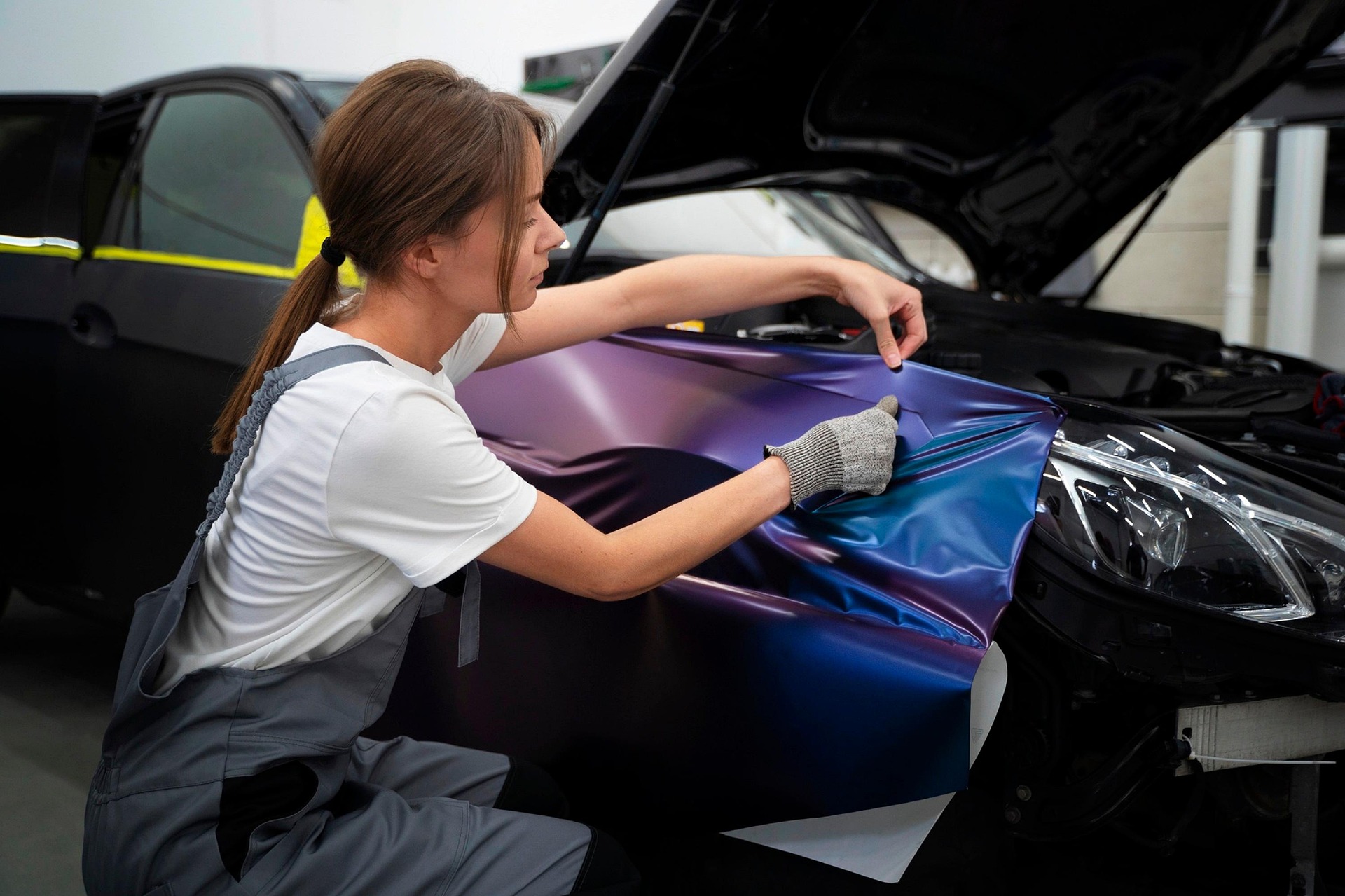
If you love your car, you know the sinking feeling of discovering the first stone chip or scratch on its pristine paint. Driving on Gold Coast roads, from the M1 to local streets, exposes your vehicle to a constant barrage of gravel, road debris, and other hazards. So, what is paint protection film and how can it help? In simple terms, it’s like an invisible suit of armor for your car.
Paint Protection Film (PPF), often called a “clear bra,” is a transparent, durable film applied directly over your vehicle’s paint. Its sole purpose is to take the hit so your factory paint doesn’t have to. The global market for this incredible technology was valued at around $5.3 billion in 2024, showing just how many drivers trust it to protect their investment. This guide breaks down everything you need to know about what is paint protection film and why it might be the smartest upgrade you can make for your vehicle.
The Science Behind the Shield: Thermoplastic Polyurethane (TPU)
At the heart of modern PPF is an advanced polymer called Thermoplastic Polyurethane, or TPU. This isn’t just any plastic; it’s a high tech, rubber like material known for its exceptional elasticity and impact resistance.
The “thermoplastic” part means it becomes soft and moldable when heated, which is how our skilled installers at Gold Coast Wrap Kings can stretch and shape it perfectly around your car’s every curve. The polyurethane core is what gives the film its strength, allowing it to absorb the energy from a flying rock and prevent it from chipping the paint underneath. Most high quality films use a specific type called aliphatic TPU, which includes UV inhibitors to ensure the film never yellows or cracks from sun exposure, keeping it crystal clear for years.
How PPF Guards Your Car Against Everyday Damage
The primary job of PPF is to act as a sacrificial shield. Modern films are typically 6 to 10 mils thick, which is substantial enough to stop most common threats. Here’s what this invisible layer defends against:
-
Stone Chips and Road Debris: When gravel hits the film, the flexible polyurethane layer dissipates the impact energy, preventing the sharp point from puncturing through to your paint. It effectively stops the hundreds of tiny chips that can pepper a car’s front end over time.
-
Scratches and Abrasions: Light scuffs from tree branches, accidental brushes in a parking lot, or even fingernail scratches around door handles will mark the film, not your car’s clear coat.
-
Chemical and Environmental Hazards: PPF creates a barrier that stops corrosive substances from ever touching your paint. This includes acidic bird droppings, bug splatter, tree sap, and road tar, all of which can permanently etch or stain your paint if left untreated.
The Magic of Self Healing Film
One of the most impressive features of modern PPF is its self healing ability. The top layer of the film is an elastomeric clear coat. When it gets a minor scratch or swirl mark, the polymers are simply disturbed, not removed.
With a little heat, these polymers reflow and return to their original, smooth state, making the scratch disappear. For a track‑driven example, see our Corvette Stingray full-body, self-healing PPF project. Often, just the ambient heat from the Gold Coast sun is enough to make light wash swirls vanish. For a slightly deeper scratch, pouring warm water over the area will cause it to melt away in seconds. This self healing process can happen over and over without wearing the film out, keeping your car looking glossy and swirl free long after it’s been installed.
Where Should You Apply PPF? High Impact Zones
While you can wrap an entire vehicle in PPF for ultimate protection, most owners focus on the areas most vulnerable to damage. These high impact zones are where an investment in PPF pays off the most.
-
Front Bumper: This is the number one target for rocks, gravel, and bugs. It’s why PPF was originally nicknamed a “clear bra.”
-
Hood: The leading edge of the hood is highly susceptible to chips. Many customers choose to cover the full hood for a seamless, invisible look.
-
Front Fenders: The panels behind the front wheels take a beating from tire sling.
-
Side Mirrors: These stick out and are magnets for debris and parking lot scuffs.
-
Headlights: PPF protects modern polycarbonate headlights from pitting, cracking, and yellowing due to UV exposure.
-
Rocker Panels: The lower sides of the car are constantly sandblasted by road grit.
-
Door Edges & Handle Cups: Small, discreet pieces of film here prevent chips from opening doors into walls and scratches from fingernails.
At Gold Coast Wrap Kings, our most popular option is the “Full Front” package, which covers the bumper, hood, fenders, and mirrors, providing comprehensive protection for the entire forward‑facing portion of your car. See our recent PPF projects for coverage examples.
How Is PPF Installed? A Look at Professional Methods
Applying PPF is a craft that requires precision and experience. There are two primary methods used by professional installers.
-
Precision Pattern Cutting: We use specialized software and a plotter to computer cut the film into exact patterns for your vehicle’s make and model. This ensures a perfect fit around every curve, sensor, and emblem. The biggest benefit is safety, as there is no need for a blade to ever touch your car’s paint.
-
Bulk (Custom) Installation: For unique situations or modified vehicles, an installer uses a large sheet of film and trims it by hand directly on the car. This technique allows for maximum coverage and wrapped edges but requires immense skill to avoid damaging the paint.
Regardless of the cutting method, the film is almost always applied using a wet installation. We spray a slip solution (a mixture of water and a special soap) on both the car’s surface and the film’s adhesive. This allows us to slide the film into the perfect position before using a squeegee to push out the liquid, activating the adhesive and ensuring a bubble free, crystal clear finish.
How Long Does Paint Protection Film Last?
A professionally installed, high quality paint protection film is a long term investment. You can expect it to last between 5 and 10 years, and many top tier brands offer warranties to match.
Modern films are engineered with UV stabilizers that prevent them from yellowing, cracking, or turning hazy over time, a common problem with older generations of film. With basic care like regular hand washing, your PPF will continue to protect and look great for years. And when the time comes, it can be professionally removed, revealing the perfectly preserved paint underneath.
Understanding Your PPF Warranty
Reputable PPF manufacturers stand behind their products with extensive warranties, typically ranging from 7 to 10 years. These warranties cover defects in the film itself, such as:
-
Yellowing or staining
-
Cracking or bubbling
-
Peeling or delamination
It’s important to know that warranties do not cover damage from accidents, abuse, or normal wear and tear. If a large rock punctures the film, it’s not a defect; it’s the film sacrificing itself to save your paint. A professional shop like Gold Coast Wrap Kings will also provide a workmanship warranty to cover any installation related issues, giving you complete peace of mind.
PPF vs. Vinyl Wrap: Protection or Aesthetics?
People often confuse PPF and vinyl wraps, but they serve very different purposes.
|
Feature |
Paint Protection Film (PPF) |
Vinyl Wrap |
|---|---|---|
|
Purpose |
Protection: Designed to absorb impacts and prevent scratches. |
Aesthetics: Designed to change the vehicle’s color or finish. |
|
Material |
Thick Thermoplastic Polyurethane (TPU), around 6 to 8 mils. |
Thin Polyvinyl Chloride (PVC), around 3 to 4 mils. |
|
Appearance |
Optically clear (or a satin finish) to show the paint underneath. |
Opaque and available in hundreds of colors and finishes. |
|
Self Healing |
Yes, minor scratches disappear with heat. |
No, scratches are permanent. |
|
Lifespan |
5 to 10+ years. |
3 to 7 years. |
|
Cost |
Generally more expensive due to the advanced material. |
Generally more affordable. |
In short, if your goal is to preserve your car’s factory paint, PPF is the answer. If you want to change its look, you want a vinyl wrap. For the ultimate solution, many clients apply PPF to the high‑impact areas and then wrap the rest of the car in a custom color. EV owners can explore our latest EV projects for ideas. If you’re unsure which is right for you, our team at Gold Coast Wrap Kings can help you decide.
PPF vs. Ceramic Coatings vs. Sealants: What’s the Real Difference?
This is another common point of confusion. For a deeper dive, read our detailed PPF vs ceramic coating comparison.
-
Paint Protection Film (PPF): A physical barrier. It’s a thick, tangible film that stops physical damage like rock chips and scratches. It is the only product of the three that can do this.
-
Ceramic Coating: A hard, sacrificial shell. This liquid polymer cures into a microscopic layer of glass like protection (about 1 to 2 microns thick) that is extremely hydrophobic (repels water) and resistant to chemicals and UV rays. It makes your car incredibly easy to clean and adds amazing gloss, but it will not stop rock chips.
-
Paint Sealant: A temporary chemical barrier. Think of this as a supercharged wax. It’s a synthetic polymer that provides a few months of shine and water beading but offers minimal protection against anything else.
The ultimate combination for many car enthusiasts is to apply PPF to the high impact areas for physical protection, and then apply a ceramic coating over the entire car (including the film) for maximum gloss and ease of maintenance.
More Than Just Cars: Other Uses for PPF
The same technology that protects your car is used in many other industries.
-
Aerospace: The original “helicopter tape” is still used on the leading edges of helicopter rotor blades and airplane wings to prevent erosion.
-
Electronics: The self healing film on your smartphone screen protector is a direct descendant of PPF.
-
Bicycles and Motorcycles: Cyclists and bikers use film on frames and gas tanks to protect against chips and scuffs.
-
Home and Commercial: Film can be used on countertops, touch screens, and glass surfaces to prevent scratches in high traffic areas.
From the Battlefield to the Bumper: The Military Origins of PPF
The story of what is paint protection film begins not in a detail shop, but on the battlefields of the Vietnam War. The U.S. military needed a way to protect the leading edges of helicopter rotor blades from being destroyed by shrapnel and debris. They tasked the company 3M with creating a solution, and the result was a durable, transparent urethane film that was quickly nicknamed “helicopter tape.”
After the war, the technology found a new home in auto racing, where teams applied it to the front of their cars to survive brutal endurance races. By the 1980s, a thinner, clearer version was made available to consumers, and the “clear bra” was born. Today’s advanced, self healing PPF is a direct evolution of that original battle tested technology.
Frequently Asked Questions About Paint Protection Film
It is primarily made from a durable and flexible material called thermoplastic polyurethane (TPU), which is designed to absorb impacts and resist scratches.
A high quality, professionally installed clear PPF is virtually invisible. It enhances the gloss of the paint beneath it without changing the color. We also offer satin PPF that can give your glossy car a modern matte finish.
They serve different purposes. PPF is better for preventing physical damage like rock chips and scratches. A ceramic coating is better for providing gloss, UV protection, and making your car easier to clean. For the best protection, you can use both together.
The cost varies depending on the vehicle size, the complexity of the panels, and how much of the car you want to cover (e.g., front end vs. the full car). For an accurate quote tailored to your vehicle, it’s best to contact us at Gold Coast Wrap Kings.
Care is simple. You can wash your car as you normally would, though hand washing is always recommended. Avoid using abrasive polishes on the film. Most films are hydrophobic, meaning they repel water and stay cleaner for longer.
No. When removed professionally, PPF will not damage your original factory paint. The adhesives are designed to be strong yet removable, leaving the pristine paint underneath just as it was the day the film was applied.