
TL;DR
Paint protection film (PPF) is a transparent, self-healing thermoplastic urethane film applied to vehicle paintwork to shield it from stone chips, scratches, UV damage, and chemical stains. It works by absorbing and dispersing impact energy across its layered structure, while a heat-activated self-healing top coat repairs minor scratches on its own. Premium films last 5 to 10 years and come in gloss, satin, or matte finishes. This guide covers PPF composition, the science behind it, coverage options, limitations, and why it matters especially in Australian conditions.
Paint protection film is one of those products that sounds too good to be true until you understand the engineering behind it. A nearly invisible layer of film that absorbs rock chips, heals its own scratches, and blocks UV damage? That’s exactly what it does, and there’s straightforward science explaining why.
This guide breaks down what paint protection film is, how it works at a material level, what it protects against (and what it doesn’t), and how to make an informed decision about coverage for your vehicle.
What Is Paint Protection Film?
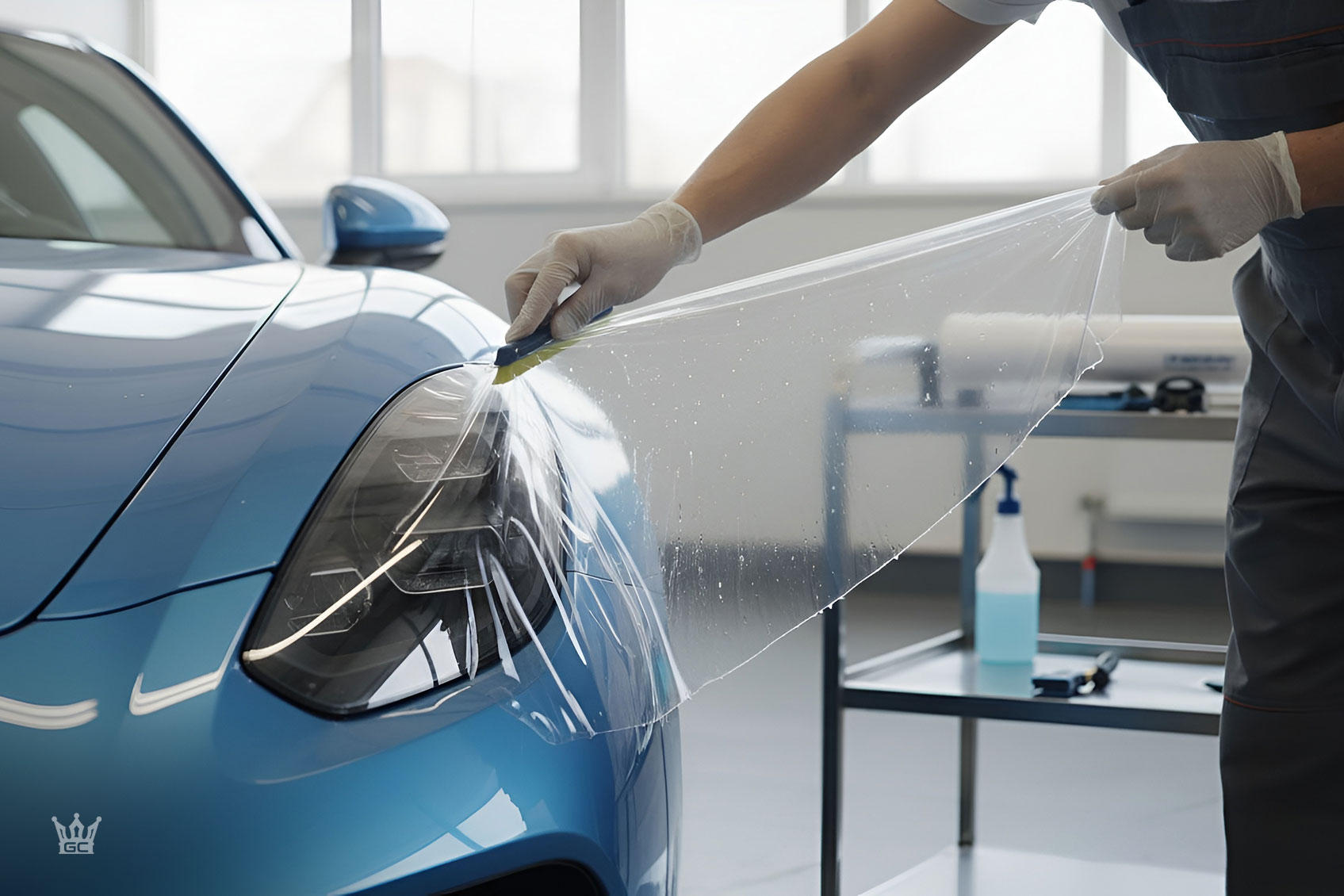
Paint protection film, commonly called PPF, clear bra, or clear film, is a thermoplastic urethane film applied to painted surfaces of a new or used car to protect the paint from stone chips, bug splatters, and minor abrasions. The film is virtually invisible on gloss finishes and sits as a sacrificial barrier between your vehicle’s paint and the outside world.
PPF is not limited to cars. The same technology protects motorcycles, RVs, aircraft, and even electronics screens. But automotive use dominates the market, accounting for approximately 73.64% of overall PPF revenue in 2024.
The global PPF market reached USD $1.09 billion in 2025 and is projected to grow to $1.55 billion by 2030, reflecting a compound annual growth rate of 7.2%. This isn’t a niche product anymore. It’s becoming standard practice for anyone serious about preserving paintwork.
What Is PPF Made Of? The 4-Layer Structure
Understanding what paint protection film is and how it works starts with its composition. A modern PPF sheet is not a single material. It’s a multi-layer sandwich, each layer performing a specific function.
|
Layer |
Function |
Approximate Thickness |
|---|---|---|
|
Clear coat (top coat) |
Self-healing, UV blocking, stain resistance, hydrophobic properties |
Thin outer layer |
|
TPU core |
Impact absorption, elasticity, structural strength |
Bulk of the film |
|
Acrylic adhesive |
Bonds film to vehicle paint; repositionable during installation |
~1.6 mils (0.040 mm) |
|
Polyester release liner |
Protects adhesive before installation; peeled off and discarded |
~3.0 mils (0.076 mm) |
A standard PPF measures around 7.5 to 8 mils thick, which is roughly 190 to 200 microns. For reference, one mil equals 0.001 inches or about 25.4 microns. Specialised heavy-duty films can exceed 10 mils for applications like off-road vehicles or track cars.
That’s remarkably thin. You’re adding less than 0.2 mm to the surface, yet gaining meaningful protection against physical and chemical damage.
Why the Film Material Matters More Than Most People Realise
This is where most guides stop, and it’s exactly where the most important buying decision begins. Not all PPF is created equal, and the base polymer determines everything from clarity to longevity.
Aliphatic TPU (premium tier): The gold standard. Aliphatic thermoplastic polyurethane offers superior UV resistance and optical clarity. After 2,000 hours of accelerated QUV weathering testing, the colour change (ΔE) remains below 2, which is essentially imperceptible to the naked eye. This is what you want on any vehicle, but especially on white or light-coloured paint.
Aromatic TPU/TPH (mid tier): Contains benzene ring structures that make it yellow 3 to 5 times faster than aliphatic TPU. Typical usable lifespan sits at 2 to 5 years before discolouration becomes noticeable. It’s cheaper upfront, but you’ll likely replace it sooner.
PVC (budget tier): The lowest grade. Rigid, prone to cracking, and can begin yellowing within 2 years. PVC-based films are not self-healing and offer significantly less impact absorption.
Practitioners on automotive forums like Mustang7G report that lower-quality films can give white vehicles a faint yellowish tint. The consensus: always confirm your installer uses aliphatic TPU, especially on lighter colours.
A practical takeaway: ask your installer what film base they use. If they can’t tell you, that’s a red flag.
How Paint Protection Film Works: The Science
Knowing what paint protection film is only tells half the story. Understanding how it works reveals why this thin layer outperforms waxes, sealants, and coatings for physical protection.
Impact Absorption and Energy Dispersal
PPF works by absorbing and dispersing the energy of impacts, preventing them from reaching the paint. When a stone strikes the film at highway speed, the TPU core distributes that force across a wider area rather than allowing it to concentrate at a single point. The paint underneath stays intact. The film takes the hit.
This is the core principle: PPF is a sacrificial layer. It exists to be damaged instead of your paint. A rock that chips or creases the film is the film doing exactly what it was designed to do.
Self-Healing: How Scratches Disappear
The self-healing property is what separates modern PPF from older protective films. The clear coat layer contains elastomeric polymers with shape memory. When the film sustains a light scratch, the elastomers react to warmer temperatures, allowing them to flow back into their original shape.
Think of it like a memory foam mattress. Press it, and it deforms. Release the pressure and add warmth, and it returns to its original form. Minor scratches typically disappear within 30 seconds to five minutes after exposure to heat. That heat can come from direct sunlight, warm water, or a heat gun set to 54 to 65°C.
You can see this self-healing property in action on vehicles like the Corvette Stingray full-body PPF project, where track-driven cars rely on the film to recover from repeated surface abrasion.
There are limits, though. Surface-level swirl marks and light scratches heal. A rock impact that creases or punctures through the film will not self-heal. Contributors on CorvetteForum and 4Runner6G threads emphasise this distinction repeatedly: PPF protects against minor impacts, not deep gouges or dents. It’s a shield, not armour plating.
UV Protection
The polyurethane film contains UV stabilisers that absorb and deflect ultraviolet radiation before it reaches the paint. This prevents the oxidation, fading, and chalking that UV exposure causes over time.
This matters enormously in Queensland. Australia has some of the highest levels of UV radiation in the world, and summer UV Index readings in Queensland and the Northern Territory frequently exceed UVI 14. For comparison, a UV Index above 11 is classified as “extreme” globally. Paint degradation from UV happens significantly faster here than in milder climates, making PPF’s UV filtering function especially valuable on the Gold Coast.
Hydrophobic Surface Properties
Premium PPF top coats are engineered to repel water. Water beads up and rolls off the surface, carrying dirt and contaminants with it. This makes the vehicle easier to wash, keeps it cleaner between washes, and reduces the chance of water-spot etching.
The hydrophobic layer does wear gradually over the film’s life, but quality films maintain strong water repellency for years before any reduction becomes noticeable.
What Does PPF Protect Against?
Here’s a practical list of what paint protection film defends against daily:
-
Stone chips and road debris (the primary reason most people get PPF)
-
Bug splatter and bird droppings (acidic compounds that etch paint quickly in warm climates)
-
Tree sap and pollen
-
Minor scratches from car washes, fingernails, keys
-
UV-induced fading and oxidation
-
Road salt and chemical exposure
-
Mineral deposits from hard water
On the Gold Coast specifically, the combination of intense UV, salty sea air, highway debris along the M1, and construction zone gravel creates a perfect storm of paint threats. PPF addresses all of them simultaneously.
What PPF Does NOT Protect Against
Honesty builds trust, so here’s what paint protection film won’t do:
It won’t prevent dents. PPF absorbs surface energy, not the kind of force that dents sheet metal. A shopping trolley or hailstone that would dent bare paint will still dent paint covered in PPF.
It won’t stop major impacts. A large rock at high speed can puncture through the film. When that happens, the film sacrificed itself to reduce the damage, but the paint underneath may still be affected.
It doesn’t replace proper maintenance. Bird droppings left baking on PPF for weeks can still stain the top coat. Regular washing matters.
It won’t fix existing paint damage. PPF is applied over the paint’s current condition. Swirl marks, scratches, or oxidation present before installation will be sealed under the film. Most professional installers perform paint correction before application for this exact reason.
Members of the 4Runner6G forum put it bluntly: PPF makes the strongest financial sense on vehicles valued above $60,000 or those driven daily on highways and gravel roads. That said, anyone who wants to maintain their vehicle’s finish, regardless of value, benefits from even partial coverage.
PPF Coverage Options
Not every vehicle needs full-body coverage, and not every budget allows for it. Coverage is typically offered in tiers:
Partial front (high-impact zones): Covers the front bumper, a partial section of the bonnet, and mirror caps. The most budget-friendly option for basic chip protection.
Full front: Covers the entire bonnet, front bumper, front fenders, mirrors, and headlights. This is the sweet spot for daily drivers, protecting every surface that faces oncoming debris. In Australia, full front coverage typically ranges from A$1,700 to $1,950.
Full body: Every painted panel gets covered. The premium choice for high-value vehicles, show cars, or anyone who wants comprehensive protection. Full-body coverage in Australia generally runs from A$4,500 to $7,000 or more, depending on vehicle size and film brand.
Custom and specialty coverage: Track-focused cars might get extra layers on rocker panels and rear fenders. Off-road vehicles benefit from bush wraps for off-road paint protection, which cover vulnerable lower body panels, wheel arches, and sills exposed to branches, gravel, and mud.
You can explore PPF coverage options to see which tier makes sense for your vehicle and driving conditions.
How Is PPF Installed?
Professional PPF installation is a precision process. There are two main methods:
Pre-cut patterns: Software like XPEL DAP or SunTek generates cutting templates from a database of thousands of vehicle models. The film is cut by a plotter to match each panel precisely. This method is faster, more consistent, and reduces waste. It’s the standard approach for most vehicles.
Bulk hand-trimming: The installer works from a larger sheet, positioning and trimming the film directly on the vehicle. This method is used for custom coverage areas, unusual panel shapes, or vehicles not yet in the pattern database.
Both methods use a wet application process. A slip solution (typically water with a small amount of soap) is sprayed on the panel, allowing the installer to position and reposition the film before squeegeeing out the solution and activating the adhesive bond. The film is then heat-formed around curves and edges using a heat gun to ensure full conformity to the panel shape.
The number one installation failure, according to professional detailers, is poor surface preparation. Any contaminants, dust, or polish residue trapped under the film will cause bubbling and premature failure. A proper install begins with thorough decontamination and, ideally, paint correction.
This is not a DIY job for most people. The materials are expensive, the technique is demanding, and mistakes show. Professional installation is a requirement for warranty coverage from every major film manufacturer.
How Long Does PPF Last?
Paint protection film typically lasts between 5 and 10 years, depending on material quality, installation skill, environmental conditions, and maintenance. Entry-level films generally show noticeable wear within 2 to 5 years, while premium aliphatic TPU films maintain clarity and performance for a full decade.
XPEL warrants their products for 10 years against defects including yellowing, cracking, blistering, and delaminating. Some newer brands offer 12-year warranties. It’s worth noting that warranties cover manufacturing defects, not impact damage. A rock chip in the film is the film working as intended.
Key factors that shorten PPF lifespan:
-
Cheap film material (aromatic TPU or PVC instead of aliphatic TPU)
-
Excessive UV exposure without regular cleaning (relevant everywhere in Queensland)
-
Neglected maintenance (leaving contaminants on the surface accelerates degradation)
-
Poor installation (trapped contaminants cause premature failure from underneath)
For practical care tips, the guide on how to clean and care for PPF covers washing techniques, products to avoid, and maintenance schedules.
PPF Finish Options: Gloss, Satin, and Matte
PPF is no longer just a clear, glossy shield. Modern films come in three finish categories, each changing the vehicle’s appearance in different ways.
Gloss PPF is the original and most common. It’s virtually invisible once applied, preserving the factory paint appearance while adding protection. If your goal is to protect without altering the look, gloss is the standard choice.
Satin PPF has become the third-largest segment in the global PPF market, driven by customers who want a subtle matte-like appearance while maintaining some depth and sheen. Satin PPF transforms a glossy factory finish into a refined, low-gloss look while simultaneously protecting the paint underneath. It’s a two-in-one: style change and protection in a single application. The satin vs. gloss PPF decision guide for Tesla Model Y walks through this choice in detail.
Matte PPF provides a flat, stealth finish. Popular on dark-coloured vehicles, matte PPF completely eliminates gloss and gives the paint a factory-matte look without the notoriously difficult maintenance that actual matte paint requires.
The Land Rover Defender satin PPF project is a good example of how satin film can completely transform a vehicle’s character while adding a full layer of paint protection.
PPF vs. Ceramic Coating vs. Vinyl Wrap
These three products serve different purposes, and confusion between them is common. Here’s a straightforward comparison:
|
Feature |
PPF |
Ceramic Coating |
Vinyl Wrap |
|---|---|---|---|
|
Primary purpose |
Physical paint protection |
Chemical surface protection and gloss |
Colour/style change |
|
Protects against stone chips |
Yes |
No |
Minimal |
|
Self-healing |
Yes (premium films) |
No |
No |
|
UV protection |
Yes (built-in stabilisers) |
Partial |
Yes |
|
Thickness |
7.5 to 8+ mils |
Microscopic (1-2 microns) |
3 to 4 mils |
|
Lifespan |
5 to 10 years |
2 to 5 years |
3 to 7 years |
|
Changes appearance |
Only satin/matte options |
Adds gloss depth |
Full colour change |
PPF and ceramic coating complement each other. PPF provides the physical barrier; ceramic coating adds chemical resistance and enhanced gloss on top. Many owners apply ceramic coating over PPF for the best of both worlds. Our comparison of PPF vs. ceramic coating explains which option suits different needs and budgets.
Vinyl wraps are primarily aesthetic. They change your vehicle’s colour without repainting but offer only marginal physical protection compared to PPF.
PPF for Electric Vehicles and Tesla
Electric vehicles present unique considerations for paint protection, and this is an area where understanding what paint protection film is and how it works becomes especially important.
Tesla, the most common EV brand in Australia, uses notoriously soft paint. A Finnish inspection of a Tesla Model 3 rated its paint hardness at “F” on the Wolff-Wilborn pencil scratch test, several levels softer than the 2H to 3H rating standard among other manufacturers. That softness means Tesla paint chips, scratches, and swirls far more easily than conventional automotive paint.
PPF is close to essential on Teslas and similarly soft-painted EVs. The film compensates for what the factory paint lacks in durability.
EV installation also requires specific expertise. Flush-mounted door handles, integrated sensor arrays, forward-facing cameras, and unique panel gaps mean the installer needs familiarity with each EV model’s layout. Wrapping over a sensor incorrectly can interfere with Autopilot, parking sensors, or charging port access. The guide on Tesla sensor-safe PPF and wrap installation covers these considerations in detail.
Why PPF Matters on the Gold Coast
Queensland’s environment is unusually harsh on vehicle paint, and the Gold Coast sits right in the thick of it.
Australia receives some of the highest UV radiation levels on Earth, with Queensland summer UV Index readings frequently exceeding 14. That extreme UV accelerates paint oxidation, fading, and clear coat breakdown faster than nearly anywhere else in the world.
Add to that the coastal salt air, which promotes surface corrosion on unprotected paint. Combine it with acidic bird droppings that etch through clear coat within hours in summer heat, highway debris along the M1 motorway, and gravel from Gold Coast construction zones, and the case for PPF becomes difficult to argue against.
PPF’s UV stabilisers, impact resistance, and chemical barrier properties address every one of these threats simultaneously. For vehicles living on the Gold Coast, PPF isn’t a luxury, it’s practical maintenance.
The History of Paint Protection Film
PPF’s origin story goes back further than most people expect. During the Vietnam War, helicopter rotor blades and sensitive components of military transports were frequently damaged by flying shrapnel and debris. The US military asked 3M to develop a solution that was both inconspicuous and lightweight. The resulting urethane film worked so well that it remained in military use for decades. Some industry veterans still call PPF “helicopter tape,” though the term is fading.
The technology migrated to motorsport in the 1990s, where race teams applied it to high-impact areas of their cars. Consumer automotive use followed in the early 2000s, initially as “clear bra” kits for front bumpers and bonnets.
Today, PPF is OEM-approved by virtually all car manufacturers. Porsche applies it at the factory to rear wheel arches on certain models. What started as a military necessity has become a mainstream automotive protection standard.
PPF Removal: What Happens When the Film Comes Off?
Quality PPF is designed to be removable. When the film reaches the end of its life or an owner wants it replaced, a professional installer uses heat to soften the adhesive and peels the film away. The paint underneath should be in the same condition it was in when the film was applied, assuming the film was installed properly on clean, defect-free paint.
Low-quality adhesives or films left well beyond their intended lifespan can make removal more difficult, sometimes requiring adhesive remover and additional labour. This is another reason to invest in reputable film from the start. The cost of difficult removal from cheap film can exceed what you saved by choosing it.
Frequently Asked Questions
PPF is primarily made of thermoplastic polyurethane (TPU), a flexible, impact-resistant polymer. A complete PPF sheet has four layers: a self-healing clear coat on top, a TPU core that absorbs impacts, an acrylic adhesive that bonds to the paint, and a release liner that’s removed during installation. The total thickness is typically 7.5 to 8 mils (about 190 to 200 microns).
Gloss PPF is designed to be virtually invisible. Once professionally installed, it’s extremely difficult to detect from normal viewing distances. Satin and matte PPF are visible by design, as they intentionally change the surface finish. On very close inspection, you may notice film edges at panel boundaries, but a skilled installer minimises these by tucking edges or wrapping them around panel breaks.
Full front coverage (bumper, bonnet, fenders, mirrors, headlights) typically costs A$1,700 to $1,950. Full body coverage ranges from approximately A$4,500 to $7,000 or more depending on vehicle size and the film brand selected. To get accurate pricing for your specific vehicle, request a tailored quote.
It depends entirely on the film quality. Premium aliphatic TPU films resist yellowing for 10+ years and carry warranties against it. Aromatic TPU films yellow 3 to 5 times faster, and cheap PVC films can discolour within 2 years. Always confirm the film material before committing to installation.
Technically, yes. Practically, it’s extremely difficult to achieve professional results without training and the right environment. Bubbles, misalignment, contamination under the film, and poor edge wrapping are common DIY problems. Every major film manufacturer requires professional installation for warranty coverage.
For vehicles regularly driven on highways or in areas with road debris, PPF on at least the front end pays for itself by preventing stone chips that would otherwise require paint correction or respraying. Forum discussions consistently suggest PPF is most cost-effective on vehicles driven daily on highways, gravel roads, or in construction-heavy areas.
PPF does not repair existing paint damage. It locks in whatever condition the paint is in at the time of application. Professional installers typically perform paint correction (polishing out swirl marks and light scratches) before applying film so the preserved surface looks its best.
Regular hand washing with a pH-neutral car shampoo is the foundation. Avoid automated car washes with abrasive brushes. Remove bird droppings and bug splatter promptly, especially in hot weather. Detailed care instructions are available in the PPF cleaning and maintenance guide.