
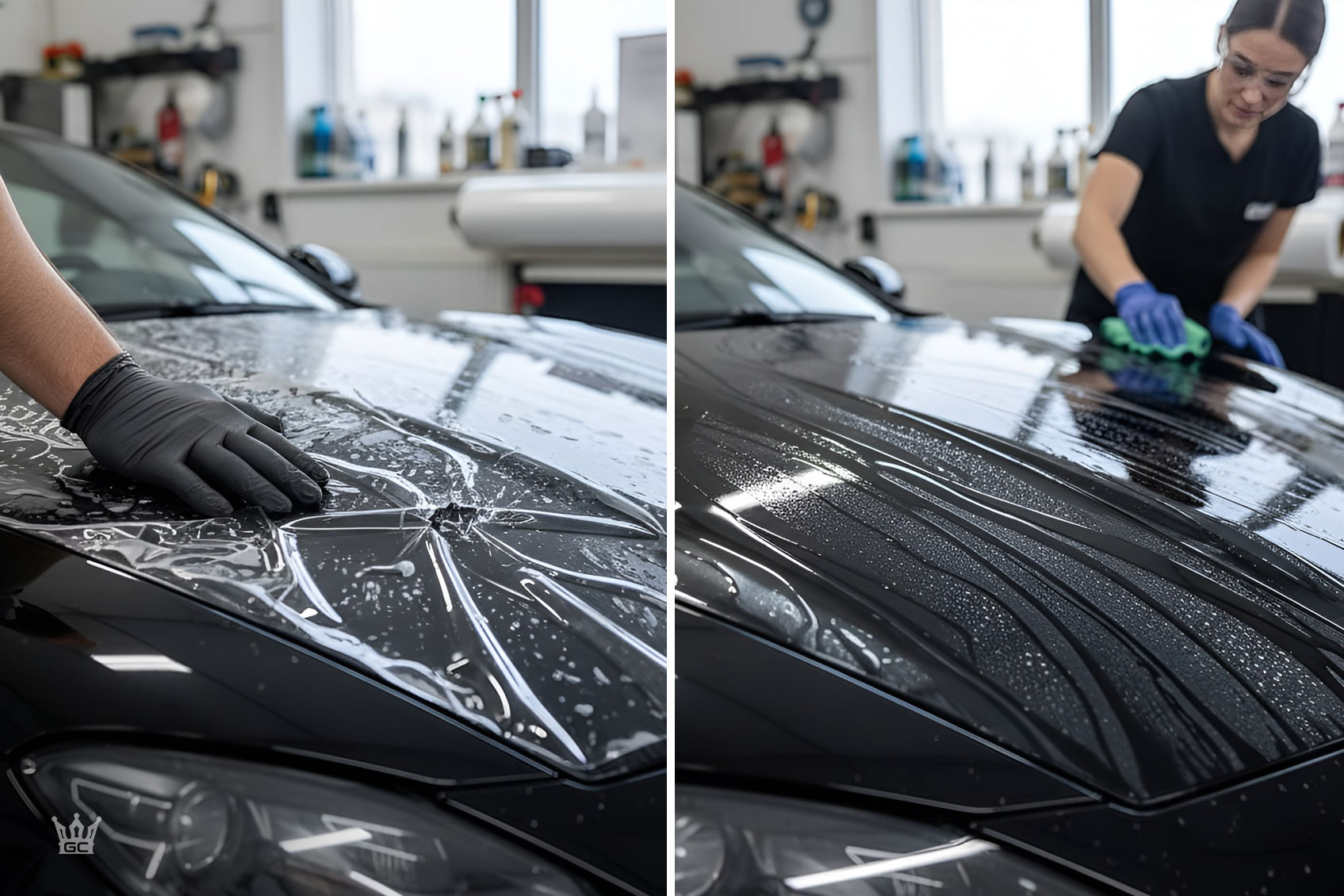
TL;DR
PPF (paint protection film) is a thick physical film that absorbs rock chips, scratches, and road debris before they reach your paint. Ceramic coating is an ultra-thin chemical bond that repels water, dirt, UV rays, and contaminants. They protect against completely different threats, and neither replaces the other. For complete protection, most professionals recommend using both together.
The Short Answer
The difference between PPF and ceramic coating comes down to one thing: what they’re designed to stop. PPF is a physical barrier that takes hits. Ceramic coating is a chemical barrier that sheds grime. Think of PPF as armour and ceramic coating as a raincoat. You wouldn’t expect a raincoat to stop a rock, and you wouldn’t expect a suit of armour to repel water.
That distinction matters because choosing the wrong product (or expecting one to do the other’s job) leads to disappointment. This guide defines both products, compares them side by side, clears up common myths, and helps you decide which one fits your situation. If you want a deeper breakdown with Gold Coast pricing and driving profiles, read our detailed PPF vs ceramic coating buyer’s guide.
What Is PPF (Paint Protection Film)?
PPF is a transparent thermoplastic polyurethane (TPU) film applied directly to your vehicle’s painted surfaces. It is thick, around 8 mils or roughly 200 microns. To put that in perspective, PPF is about five to six times thicker than your car’s total factory paint, including the undercoat.
The film has a layered structure: an adhesive base, a urethane core that absorbs impacts, and a self-healing top coat. That self-healing property is not marketing fluff. The TPU polymers have a molecular “memory” of their original shape. When heat is applied (direct sunlight, warm water, even a heat gun), the polymer chains reorganise themselves, causing minor scratches and swirl marks to disappear. This process happens because increased heat gives the elastomeric molecules enough energy to move back to their original position.
PPF protects against rock chips, road debris, scratches, scuffs, bug splatter, UV fading, and chemical staining. It does not protect against major collision damage or deep dents that exceed the film’s thickness. Lifespan runs 5 to 10 years, and the film can be professionally removed without damaging factory paint.
You can see what full-body PPF looks like on a real vehicle in our Corvette Stingray PPF project, where self-healing film was applied for track-day protection.
What Is Ceramic Coating?
Ceramic coating is a liquid polymer, typically based on silicon dioxide (SiO2) or titanium dioxide (TiO2), that chemically bonds to your vehicle’s clear coat. Once cured, it creates a semi-permanent hydrophobic layer. Water beads up and sheets off the surface, carrying dirt and contaminants with it.
The critical number here is thickness. Ceramic coating measures just 1 to 3 microns. A human hair is about 70 microns. That means ceramic coating is roughly 100 times thinner than PPF. It fills microscopic pores in the clear coat, creating a smooth, glass-like surface that partially reflects UV rays and resists chemical etching from bird droppings, tree sap, and industrial fallout.
What ceramic coating cannot do: stop rock chips, prevent deep scratches, or self-heal. At 1 to 3 microns, it has zero impact absorption. It enhances your paint’s appearance and makes maintenance easier, but it is not armour.
Professional-grade ceramic coatings last 2 to 7 years depending on product tier and maintenance. Worth noting: graphene coatings are emerging as an evolution of ceramic technology, offering potentially longer durability and improved heat dissipation, though the category is still maturing.
PPF vs Ceramic Coating: Side-by-Side Comparison
|
Feature |
PPF |
Ceramic Coating |
|---|---|---|
|
Type of protection |
Physical barrier (absorbs impacts) |
Chemical bond (repels contaminants) |
|
Material |
Thermoplastic polyurethane film |
SiO2/TiO2 liquid polymer |
|
Thickness |
~200 microns (8 mils) |
1–3 microns |
|
Rock chip protection |
Yes |
No |
|
Scratch protection |
Yes (absorbs and self-heals) |
Minor swirl resistance only |
|
Self-healing |
Yes (heat-activated) |
No |
|
UV protection |
Yes |
Yes |
|
Hydrophobic properties |
Moderate (premium films only) |
Strong |
|
Gloss enhancement |
Maintains factory finish |
Noticeably deepens gloss |
|
Ease of cleaning |
Good |
Excellent |
|
Removable |
Yes (professional removal) |
Not easily; requires polishing |
|
Lifespan |
5–10 years |
2–7 years |
|
Gold Coast cost range |
$700–$1,500 (partial front) to $5,500–$10,000+ (full vehicle) |
$700–$2,000 (full vehicle) |
|
Installation time |
1–5 days |
1–2 days |
For tips on keeping PPF in top condition after installation, see our guide to cleaning paint protection film.
What Neither Product Does
Honesty builds better expectations. Neither PPF nor ceramic coating will protect against major collision damage, significant dents from parking lot incidents, or deep gouges that penetrate beyond the film or coating layer. They are maintenance and preservation tools, not structural reinforcements. If someone promises otherwise, be skeptical.
Common Misconceptions
“Ceramic coating is scratch-proof.” It is not. Practitioners on Reddit consistently push back on this myth. Ceramic coating offers minor swirl resistance during washing, but it will not stop a key scratch, a branch drag, or a stone chip. Experienced detailers on forums stress that ceramic and PPF serve entirely different purposes, and confusing the two leads to the most common buyer regret.
“PPF and ceramic coating do the same thing.” They overlap only on UV protection. Everything else is different. One truck owner on the Tacoma 4G forum put it simply: “PPF cuts down on the chips and scratches. Ceramic coating just allows the water and mud to shed off the vehicle better.”
“You only need one.” If your budget allows only one, pick the product that addresses your biggest threat. But the best protection uses both, which we cover in the next section.
“Ceramic coating means you never wash your car again.” You still wash. You just wash less often and with less effort because contaminants don’t bond as aggressively to the coated surface. Another common Reddit myth that detailers frequently correct.
“Dealership ceramic/PPF packages are fine.” Multiple community sources warn against accepting dealership-installed protection. Common complaints include significant markups, lower-quality products, and subcontracted installers with less expertise than specialist shops. If you’re buying a new car and considering protection, our guide on the best paint protection options for new vehicles on the Gold Coast covers this in detail.
Can You Use PPF and Ceramic Coating Together?
Yes, and this is what most professionals recommend. The standard approach: apply PPF to high-impact zones first (front bumper, bonnet, fenders, mirrors, rocker panels), then apply ceramic coating over the entire vehicle, including over the PPF.
Why layer them? PPF alone has limited hydrophobic properties. Ceramic coating over PPF adds that water-beading, self-cleaning behaviour to the film. It also creates a uniform gloss across all panels, so you don’t get a visual mismatch between filmed and unfilmed areas. The result is physical protection where you need it most, plus chemical protection and easier maintenance everywhere.
On the Gold Coast specifically, this combination makes sense. High UV exposure year-round accelerates oxidation. Salt air along coastal suburbs attacks clear coats. And anyone commuting the M1 knows how much road debris hits the front end during peak traffic. PPF handles the physical threats; ceramic handles everything else.
Which One Should You Choose?
Choose PPF if you’re primarily worried about rock chips, road debris, and scratches. Daily M1 commuters, 4×4 owners heading off-road, and anyone with a new or high-value vehicle should prioritise PPF on at least the front end. Our complete guide to paint protection film covers coverage options from partial front to full vehicle.
Choose ceramic coating if your car is garage-kept or low-mileage, you’re focused on appearance and easy cleaning, and physical damage risk is low.
Choose both if you want comprehensive protection and your budget supports it. This is the approach taken on most of the high-end vehicles that come through specialist shops, from Teslas to supercars.
One lesson from real owners: a truck enthusiast on the Tacoma 4G forum got PPF only on the bonnet but regretted not covering the rear wheel arch panels. Within months, rock debris kicked up by the front tyres had already damaged that area. Coverage planning matters, and a quick conversation with an installer can prevent those gaps.
If you’re weighing options for your vehicle, get in touch with Gold Coast Wrap Kings to discuss what coverage makes sense for your car, your driving habits, and your budget.
FAQ
Neither is “better” because they address different problems. Ceramic coating excels at repelling contaminants and enhancing gloss. PPF excels at absorbing physical impacts. Asking which is better is like asking whether sunscreen is better than a helmet. They protect against different things.
PPF typically lasts 5 to 10 years, with premium brands carrying manufacturer warranties up to 10 or even 12 years. Ceramic coating lasts 2 to 7 years depending on the product grade and how well it’s maintained. Professional-grade ceramic significantly outlasts consumer DIY products.
No. Ceramic coating is only 1 to 3 microns thick. It has no ability to absorb physical impact. Only PPF, at roughly 200 microns, provides meaningful rock chip protection.
Premium PPF products include a hydrophobic top layer, but it is not as effective as a dedicated ceramic coating. Applying ceramic over PPF gives you the best of both: impact protection from the film plus strong water-beading from the coating.
PPF goes on first, always. The film is applied to the paint, then ceramic coating is applied over both the PPF and any exposed painted surfaces. This order ensures proper adhesion for both products.
For most Gold Coast drivers, yes. The combination provides physical protection on high-impact zones and chemical protection everywhere else. It also simplifies maintenance across the whole vehicle. The upfront cost is higher, but it reduces the risk of expensive paint correction or respray work down the line.
Generally, specialist installers offer better products, more experienced technicians, and competitive pricing compared to dealership add-on packages. Dealerships often subcontract the work and mark up significantly. Browse our PPF and protection services to see what specialist installation looks like.