
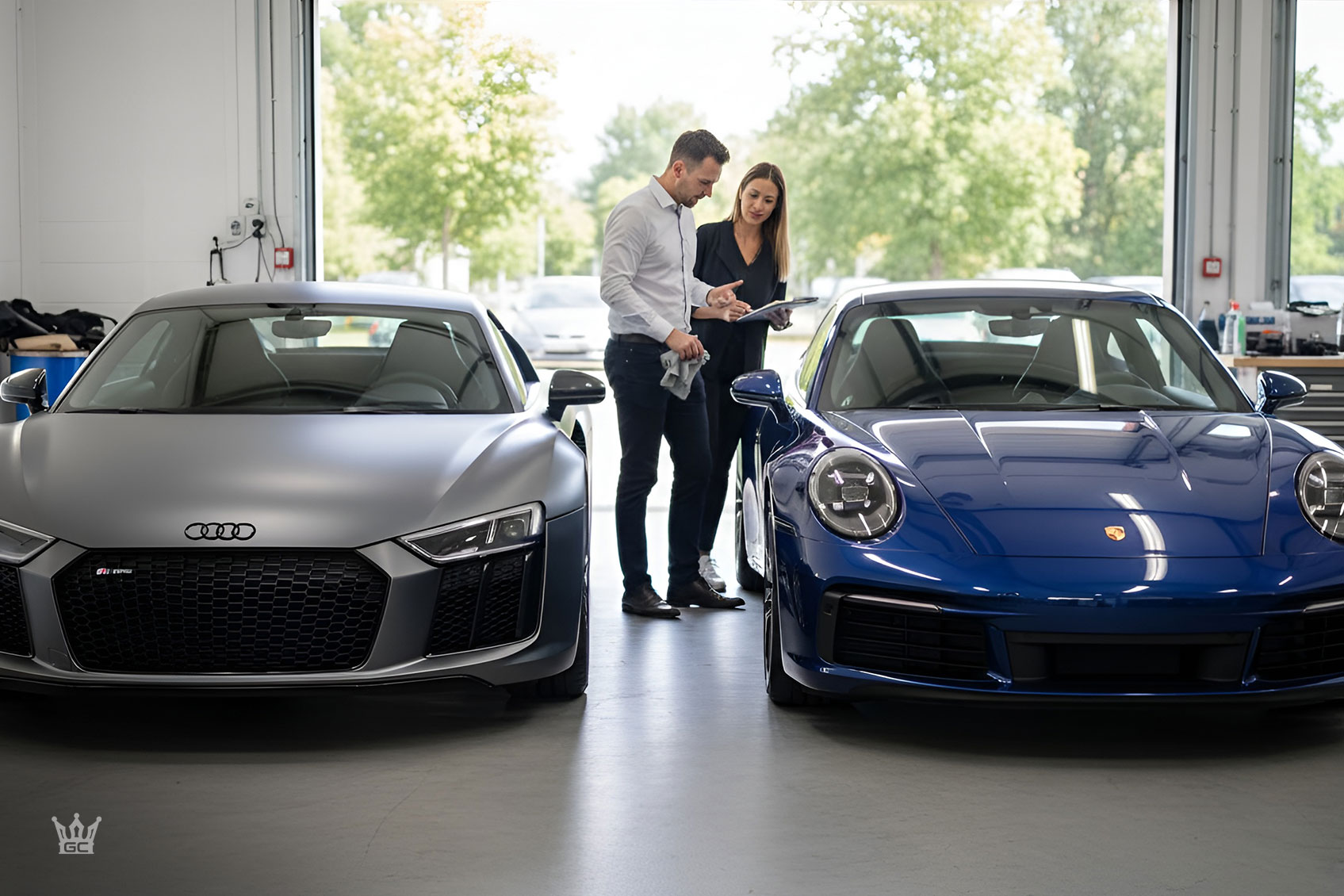
TLDR
A gloss car wrap mimics polished factory paint with strong reflections and deep colour. A satin car wrap sits between gloss and matte, giving a soft, modern sheen without mirror-like glare. Gloss is easier to maintain and clean, while satin delivers a more premium, custom look but demands more careful washing habits. If stone-chip protection matters more than a colour change, satin paint protection film (PPF) is a different product worth considering alongside, or instead of, satin vinyl.
Quick Answer: Should You Choose Satin or Gloss?
Choose gloss if you want maximum shine, the closest look to factory paint, and the simplest cleaning routine. Gloss works for daily drivers, bright colours, fleet vehicles, and anyone who parks outside and washes when they remember to.
Choose satin if you want a refined, lower-glare finish that looks unmistakably custom. Satin highlights body lines beautifully and suits luxury cars, EVs, and performance builds. But it needs more careful washing with satin-safe products, and it punishes neglect faster than gloss, especially in dark colours.
If your main concern is protecting paint from road debris rather than changing the colour, you should be comparing paint protection film options rather than (or in addition to) vinyl wrap finishes.
What Is a Satin Car Wrap?
A satin car wrap is a vinyl film with a soft, low-glare sheen. It is not flat like matte and not reflective like gloss. Light hits the surface and diffuses gently, so the vehicle still shows shape and depth but without sharp mirror reflections.
Think of it as a “soft glow” finish. In direct sunlight, satin catches light smoothly rather than bouncing it back hard. In shade, it looks rich and understated. On camera, it tends to photograph well because it avoids the hotspots that gloss sometimes creates.
Satin wraps are popular on luxury SUVs, Tesla and BYD EVs, performance cars, and 4×4 builds where the owner wants something that looks expensive and deliberate. Satin black, in particular, has become one of the most requested finishes across the car community. It is not matte, though. A common misunderstanding is lumping satin and matte together. Matte is flatter and absorbs more light. Satin keeps enough sheen to show off curves and panel work.
Premium cast vinyl systems from manufacturers like Avery Dennison describe satin as a “paint-like” finish option alongside gloss and matte, available in dual-layer 80-micron film with 3D conformability.
What Is a Gloss Car Wrap?
A gloss car wrap is a shiny, highly reflective vinyl finish designed to look like polished factory paint. It gives strong reflections, deeper-looking colour, and a wet-look shine that most people find instantly familiar.
Gloss is the “safe” finish. It looks like what most cars come with from the factory, just in a different colour. That makes it the go-to choice for colour-change wraps where the owner wants a dramatic new look without the vehicle screaming “aftermarket.”
3M’s Wrap Film Series 2080 documentation describes its high-gloss colours as offering 250% better reflected image quality over typical premium cast vinyl, with a clear protective film layer on gloss and high-gloss films to reduce surface impressions during installation. That extra clarity is why gloss wraps can look genuinely paint-like when installed by a skilled team.
Gloss works especially well for bright, saturated colours (reds, blues, greens) where colour pop matters, for commercial vehicles where brand colours need to be accurate and visible, and for owners who want the easiest possible ownership experience.
You can browse examples of colour-change car wraps to see how different gloss and satin finishes look on real vehicles.
Satin vs Gloss Car Wrap: Side-by-Side Comparison
|
Factor |
Gloss wrap |
Satin wrap |
|---|---|---|
|
Reflection |
High, mirror-like |
Medium, soft glow |
|
Colour depth |
Strongest, most saturated |
Slightly muted, more refined |
|
Factory-paint look |
Very close to OEM paint |
Clearly custom/aftermarket |
|
Glare in sunlight |
Higher |
Lower |
|
Fingerprints |
Can show smudges but cleans easily |
Can show fingerprints, especially dark colours |
|
Scratch/swirl visibility |
More visible (reflections reveal defects) |
Often hides light marks better |
|
Cleaning ease |
More forgiving |
Needs satin/matte-safe care |
|
Wax/polish compatible |
Some wrap-safe products can be used |
Avoid traditional wax and gloss enhancers |
|
Best for |
Daily drivers, bright colours, fleets, easy care |
Premium builds, luxury/EV, hand-wash owners |
|
Avoid if |
You want a subtle, understated look |
You use brush car washes or rarely wash |
The core difference between satin and gloss car wraps comes down to how light behaves on the surface. Gloss bounces light back sharply, creating the deep, wet look people associate with a fresh paint job. Satin scatters light more softly, creating dimension without the mirror effect. Neither finish is objectively “better.” The right choice depends on what you want to see when you walk up to your car and how much effort you will put into keeping it clean.
Which Finish Is Easier to Maintain?
Gloss wins this one. It is more forgiving across nearly every cleaning scenario.
Both finishes require hand washing as the ideal cleaning method. 3M’s maintenance documentation states that hand washing is best for wrapped vehicles, and if a car wash is necessary, it should be touchless because brush car washes “may dull and scratch the film and/or lift graphic edges.” Avery Dennison echoes this, warning that automated brush washes can scratch vinyl, catch edges, reduce gloss, and create failure points.
Where satin and gloss diverge is in correction and product compatibility.
Gloss wraps can accept certain wrap-safe waxes and finishing products designed for smooth or gloss-textured films. If a gloss panel picks up a light mark, there are more options to address it. Satin wraps are different. Using traditional polish, wax, or gloss-enhancing products on a satin surface can create unwanted shiny spots or permanently alter the finish. Practitioners on Reddit report exactly this frustration: satin and matte finishes cannot be treated like normal gloss paint, and buffing can gloss up the film or fail to restore the original look.
The Wash Habit Test
Before picking a finish, be honest about your washing habits:
-
You use automatic brush washes: Fix this habit before wrapping. Brush washes are a known risk for both finishes.
-
You use touchless/brushless washes only: Gloss is the safer bet. Satin can work but monitor product contact.
-
You hand wash with pH-neutral soap and microfibre: Satin is realistic and rewarding.
-
You park outside, rarely wash, and live near the coast: Gloss or PPF will be more forgiving than satin.
One commenter in a popular r/CarWraps discussion described gloss as “easy mode” and said satin is only marginally easier than matte in their experience. Another added that they often suggest satin when buyers think they want matte, because satin is the more liveable option of the two low-gloss finishes.
Which Finish Hides Scratches Better?
Satin hides light marks better. But “hides” is not the same as “resists,” and this distinction is where a lot of bad advice circulates online.
Because satin diffuses light, fine swirl marks, fingerprints, and light surface scratches are less visible to the naked eye. Gloss, by contrast, acts like a mirror. Any small imperfection interrupts the reflection and becomes obvious, especially on dark colours in direct sun.
That said, satin does not make the vinyl tougher. A scratch is still a scratch. 3M notes that mild surface scratches on wrap film may disappear with heat or sunlight, but deeper scratches will not come out and would require panel replacement. This applies to both finishes.
The important takeaway: Satin changes how damage looks, not whether damage happens. If a key drags across a satin panel, the scratch is there. It just might not catch light as aggressively as it would on gloss.
And when satin does get visibly damaged, correction is harder. You cannot buff it the way you might buff a gloss surface. Doing so risks creating a mismatched sheen on the panel. Reddit users in vinyl wrap communities frequently mention this pain point, noting that heat or replacement are often the only real options for satin repair.
For gloss, minor imperfections can sometimes be addressed with gloss-safe wrap products, making it the more forgiving finish when things go wrong.
How Long Does Each Finish Last?
Neither satin nor gloss automatically lasts longer than the other. Lifespan depends on factors that have nothing to do with finish type.
Film quality matters most. Premium cast vinyl systems like 3M’s Wrap Film Series 2080 carry warranties of up to eight years for vertical applications and up to three years for horizontal applications in Australian conditions. Horizontal panels (bonnets, roofs, boot lids) cop the worst UV and heat exposure, which is why they typically degrade faster regardless of whether the finish is satin or gloss.
Installation quality, parking conditions, contaminant removal speed, and washing habits all affect how long a wrap looks good. A satin wrap on a garaged car that gets hand-washed fortnightly will outlast a gloss wrap on a car parked under a mango tree and run through a brush wash monthly.
Avery Dennison’s maintenance bulletins stress that dirt, grime, and contaminants left on film degrade it faster, especially when exposed to UV light and heat. On the Gold Coast, where UV is intense year-round, this is not optional advice.
Finish Is Only One Variable
An Audi R8 forum user made a point worth repeating: wrap material quality, where the car is parked, and installer competence affect longevity far more than the finish alone. They also recommended ceramic coating for easier cleaning and blow-drying instead of towel-drying to reduce micro-scratching.
The lesson? Choosing between satin and gloss matters, but it matters less than choosing good film, a skilled installer, and committing to proper aftercare.
Satin Vinyl Wrap vs Satin PPF: Know the Difference
This is the most commonly missed distinction in the satin car wrap vs gloss conversation. Many buyers searching for a “satin wrap” actually need paint protection film, not vinyl.
|
Product |
What it does |
Best for |
|---|---|---|
|
Satin vinyl wrap |
Changes the car’s colour and finish to satin |
Style transformation |
|
Gloss vinyl wrap |
Changes colour and finish to high-gloss |
Factory-style colour change |
|
Satin PPF |
Adds a satin finish while protecting paint from stone chips, scratches, and road debris |
Protection plus a satin look |
|
Gloss/clear PPF |
Protects paint invisibly while keeping the original gloss finish |
Invisible paint protection |
A satin vinyl wrap looks fantastic, but it is a colour-change product. It provides a sacrificial layer, meaning a rock chip hits the vinyl instead of the paint. But vinyl is not engineered for impact resistance the way PPF is.
3M describes its Wrap Film Series 2080 as a “multi-layer cast adhesive-backed film for full-colour vehicle wraps, accents, or partial decoration wraps”. That is a styling product. By contrast, 3M’s Scotchgard Paint Protection Film Pro Series 200 is designed to “protect vehicle paint from rock chips, scratches, and the elements” with self-healing technology for minor scratches and a 10-year consumer warranty.
XPEL’s STEALTH product takes the concept further. It is a satin paint protection film that protects from everyday road hazards while providing a satin finish, and it can convert a gloss vehicle into a satin look without vinyl.
If you are considering a satin finish primarily to change appearance, vinyl wrap is the right product. If you want the satin look and serious paint protection (especially on a new, luxury, or high-value vehicle), satin PPF is worth discussing. A BYD Seal wrapped in satin PPF is a good example of how the two goals, appearance and protection, can be achieved with a single film.
Land Cruiser forum members weighing satin PPF against gloss PPF raised practical concerns about whether bugs or bird droppings cause glossy spots on satin surfaces and whether buffing minor damage changes the finish. The short answer: wrong products, aggressive rubbing, or contamination left too long can alter sheen on satin PPF just as on satin vinyl. Satin-safe care products and quick contaminant removal are essential.
Best Finish by Vehicle Type and Lifestyle
|
Vehicle or use case |
Recommended finish |
Why |
|---|---|---|
|
Daily driver, outdoor parking |
Gloss |
Easiest care, most forgiving in variable conditions |
|
Garaged luxury or performance car |
Satin or gloss |
Satin for a premium custom look; gloss for deep colour |
|
Luxury SUV (Defender, G-Wagon) |
Satin |
Highlights sculptural body lines without loud reflections |
|
EV (Tesla, BYD) |
Satin or satin PPF |
Modern aesthetic; PPF if paint protection is the priority |
|
4×4 or off-road vehicle |
Satin PPF or gloss vinyl with PPF on high-impact zones |
Road debris and branches make protection important |
|
Commercial fleet |
Gloss |
Maximum colour visibility, brand accuracy, simpler fleet-wide cleaning |
|
Premium service business |
Satin |
Reduced glare, upscale impression for consulting, real estate, or executive transport |
|
Show car |
Either or mixed |
Depends on theme and how the car will be photographed |
For 4×4 and SUV owners, the satin PPF wrap on a Land Rover Defender shows how satin protection film works on a vehicle that actually gets used off-road. EV owners can explore Tesla-specific wrap considerations given the sensor and camera complexities unique to electric vehicles.
A LinkedIn post from a commercial wrap business reinforced that successful fleet wraps start by understanding where the vehicle drives, how long it will be kept, and what customers need to recognize first. For fleets, finish is a branding decision as much as a care decision. Gloss gives graphic designers the most accurate colour reproduction and the brightest shelf appeal on the road. Satin works when the business identity calls for something more refined, like a boutique property brand or a high-end trades company.
Gold Coast Care Tips for Satin and Gloss Wraps
Living on the Gold Coast means your wrap faces some of Australia’s most intense UV conditions year-round. Queensland Government data confirms the UV index is 3 or above throughout the year, and coastal salt air adds another layer of aggression to any exterior surface.
Both 3M and Avery Dennison recommend storing wrapped vehicles indoors, in shade, or under a cover whenever possible to preserve film from heat and UV. For Gold Coast owners, this is not a minor footnote. It is a genuine longevity factor.
Practical care rules for both finishes
-
Park undercover or in shade where possible, especially during peak UV hours.
-
Remove bird droppings, tree sap, bugs, fuel spills, and salt spray quickly. These bake into film fast in Queensland heat.
-
Hand wash with pH-balanced vehicle soap and clean microfibre mitts. Reused towels and dirty mitts scratch just like brushes.
-
Never use a brush car wash. Both 3M and Avery explicitly warn against them.
-
Dry thoroughly to prevent water spotting, which is especially visible on satin black.
-
For satin specifically: avoid waxes, gloss enhancers, and aggressive polishing unless the installer and film manufacturer confirm compatibility.
-
Ask before ceramic coating. 3M notes that aftermarket coatings are excluded from its MCS warranty, so check with your installer first.
A Reddit thread about cleaning black satin wrap warned that hard-water minerals left to bake in sunlight can bond to the film surface. On the Gold Coast, where bore water and hard tap water are common in some suburbs, drying the vehicle after washing is not optional for satin owners.
Another Model Y owner asked about 3M 2080 Satin Black and whether commercial hand washes would create swirl marks. Responses were mixed but leaned cautious: the quality of the wash mitt, the cleanliness of the water, and the chemicals used all matter. If you use a commercial hand wash, confirm they use wrap-safe products and clean tools.
Pressure washing limits
If you pressure wash at home, Avery Dennison provides clear limits: keep pressure below 1,200 psi, water temperature below 80°C, use a 40-degree wide spray nozzle, maintain at least 12 inches from edges, and keep the nozzle perpendicular to avoid lifting edges. Spraying at a sharp angle directly into panel gaps or wrap edges is one of the fastest ways to cause peeling.
Queensland Colour-Change Registration Note
If a full wrap changes the visible colour of your vehicle, Queensland TMR requires that changes to registration details, including colour, be notified within 14 days using the Change of Vehicle Particulars Notification form.
This applies to colour change, not finish type. Going from white gloss paint to white satin wrap would not typically trigger this. Going from white to black, regardless of whether the wrap is satin or gloss, would.
It takes a few minutes to sort out. Do not skip it.
Still Exploring Colour and Finish Ideas?
If you have the satin vs gloss question settled but are still choosing a colour, browsing creative car wrap ideas and trends can help narrow the field. And if you want to see what different finishes look like on actual vehicles (not stock photos), the wrap project gallery shows recent Gold Coast builds across satin, gloss, matte, metallic, and custom finishes.
FAQs
Yes, but softly. Satin has a noticeable sheen that catches light and shows body contours. It sits between the flat look of matte and the mirror-like reflection of gloss. In person, it reads as “premium” rather than “loud.”
Gloss is easier. It is compatible with more wrap-safe cleaning and finishing products, and it does not punish a slightly lazy wash routine as hard as satin does. Satin needs satin/matte-safe products and a gentle hand-wash approach.
Not necessarily. Both finishes can scratch. The difference is visibility: satin hides light marks better because it does not reflect as sharply. But when satin does scratch noticeably, correction is harder. You cannot buff satin the way you can sometimes address gloss imperfections.
Do not use traditional car wax or gloss-enhancing products on a satin wrap. These can create shiny spots that alter the finish permanently. Only use products specifically approved for satin or matte vinyl by the film manufacturer or your installer.
Hand washing is always best. If you must use a car wash, choose touchless or brushless only. 3M and Avery Dennison both explicitly warn against brush car washes, which can scratch film, dull the surface, and lift edges. Also avoid washing within the first 72 hours after installation.
No. Satin vinyl wrap is primarily a colour and finish change product. Satin PPF is a paint protection film that happens to have a satin appearance. PPF is thicker, engineered for impact resistance, and often includes self-healing properties. If paint protection is the priority, compare PPF options rather than vinyl wrap alone.
Both work, but gloss is the lower-risk option for daily drivers who park outside and do not always hand wash. Satin is a strong choice for owners who will commit to hand washing, quick contaminant removal, and undercover parking where possible. Queensland’s year-round UV makes aftercare more important regardless of finish.
It can, if the wrong products are used, if areas are rubbed aggressively, or if contaminants like bug splatter or bird droppings are left to bake and then scrubbed off harshly. Using satin-safe cleaners and addressing contamination quickly prevents this.
Choosing Your Finish
The satin car wrap vs gloss decision ultimately comes down to two things: the look you want and the effort you will realistically commit to care.
Gloss gives you the shine, the colour depth, and the easiest ownership experience. It is the finish that works for almost everyone.
Satin gives you a modern, premium, understated aesthetic that stands out without being aggressive. It rewards careful owners with a look that turns heads differently than gloss does.
Neither finish turns vinyl into armour. For serious paint protection alongside a satin or gloss appearance, paint protection film is the product built for that job.
The right finish depends on your car, where it lives, how you wash it, and whether the goal is a colour change, paint protection, or both. If you are still weighing the options, get in touch with the team in Nerang to discuss which product and finish suits your vehicle and your lifestyle.