
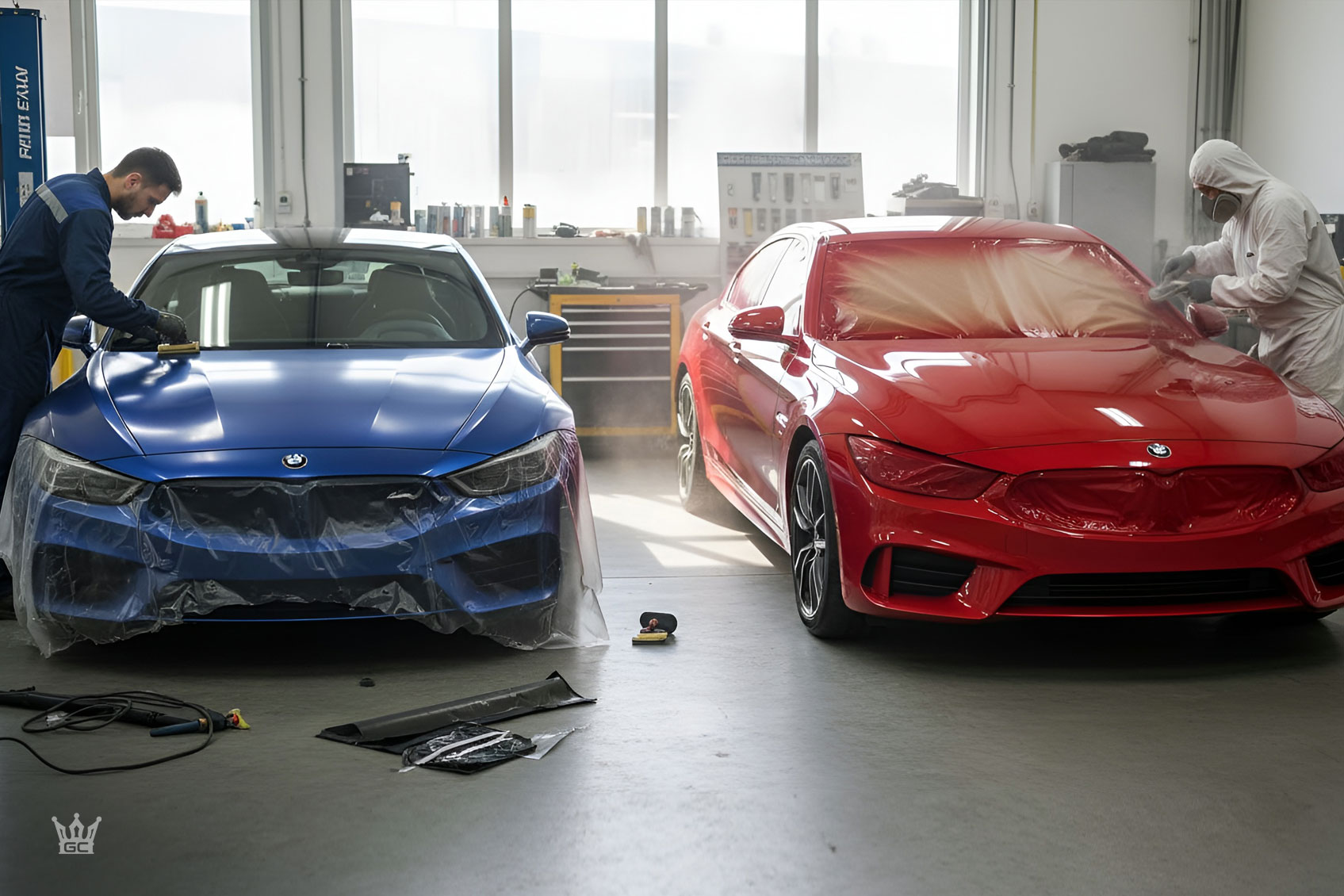
Thinking about giving your car a fresh new look? A new colour is one of the most dramatic ways to transform your ride, but it brings up a classic debate for car enthusiasts. When considering a wrap or respray which is better for colour change, the answer for most drivers is a high-quality vinyl wrap. It offers unparalleled flexibility, paint protection, and customisation at a lower cost. However, a respray remains the essential choice for vehicles with damaged paint that require restoration.
This guide breaks down everything you need to know, comparing these two popular methods across all the key factors so you can make an informed choice for your vehicle.
Understanding the Basics: Vinyl Wrap vs. Paint Respray
First, let’s get the definitions straight. They might both change your car’s colour, but they are fundamentally different processes.
-
Vinyl Wrap: This involves applying large sheets of high quality adhesive vinyl film directly over your car’s existing paint. Think of it as a durable, precisely fitted second skin. It’s a non permanent solution that protects the paint underneath. The global car wrap market was valued at a huge $9.7 billion in 2022, showing just how popular this option has become.
-
Paint Respray: This is the traditional method of repainting. It involves sanding down the original finish, applying layers of primer, the new colour coat, and a final clear coat for protection and shine. A respray is a permanent chemical bond that completely replaces the old finish.
The choice between the two often comes down to permanence versus flexibility. So, wrap or respray which is better for colour change in your situation? Let’s dive deeper.
Is Your Car a Good Candidate? Suitability for a Wrap or Respray
Before you even think about colours, you need to assess the current condition of your car’s paint. This is arguably the most important factor in your decision.
When to Choose a Wrap: The Importance of Paint Condition
A common misconception is that a vinyl wrap can hide bad paint. In reality, the opposite is true. Vinyl film is incredibly thin and conforms to every single imperfection on the surface.
A wrap is suitable if your car has:
-
Intact Factory Paint: The ideal surface is smooth, clean, and fully adhered factory paint.
-
Minor Blemishes: Very light swirl marks or tiny rock chips are usually fine and can be masked by the film.
-
A Solid Foundation: The vinyl needs a stable, non porous surface to bond to.
A wrap is not a solution for peeling clear coat, deep scratches, rust, or flaking paint. The vinyl simply won’t stick properly and will likely magnify these flaws. Trying to wrap over failing paint is a recipe for a failed wrap.
When a Respray is Necessary
If your car’s paint is in rough shape, a respray is often the only correct path forward. A professional paint job will fix the underlying problems instead of just covering them up.
Consider a respray if your car has:
-
Peeling or Fading Clear Coat: This is a deal breaker for wrapping. The wrap would stick to the failing clear coat, not the car, and could pull more of it off.
-
Deep Scratches or Dents: Bodywork and sanding are needed to create a smooth surface, which is the first step of a proper repaint.
-
Widespread Oxidation or Rust: These issues must be removed and repaired before any new finish, wrap or paint, can be applied.
Essentially, if your car needs restoration, you need to repaint it. Attempting to wrap a car with severe paint damage is, as experts say, “a bet that will backfire.”
The Practicalities: Cost, Time, and Lifespan
Let’s talk numbers and timelines. This is where the differences between wrapping and respraying become very clear.
Cost Comparison
For most people, cost is a major factor. A vinyl wrap is almost always the more budget friendly option for a high quality finish.
-
Vinyl Wrap Cost: A professional full vehicle wrap on a standard car typically costs between $2,500 and $5,000.
-
Paint Respray Cost: A quality respray that looks good and lasts can range from $5,000 to $15,000, and show quality custom paint jobs can easily soar into five figures.
While you can find cheap paint jobs for under $2,000, they often involve minimal prep work and low grade materials, meaning they will likely fade or peel within a few years. For a durable, head turning finish, wrapping offers better value for money. If you’re wondering about your specific vehicle, the team at Gold Coast Wrap Kings can provide a free quote to help you compare the costs.
Installation Time
How long will your car be out of action? The difference here is significant.
-
Vinyl Wrap: A full colour change wrap can be completed by a professional shop in just 1 to 3 days.
-
Paint Respray: A respray is a much longer process, often taking one to two weeks, or even longer. This includes sanding, priming, multiple coats, and essential curing time between each stage.
Car enthusiasts often joke about their vehicle being stuck in “paint jail.” If you rely on your car daily and can’t afford to be without it for weeks, the quick turnaround of a wrap is a massive advantage.
Durability and Lifespan
Both options are durable, but they age differently.
-
Paint: A high quality paint job can last for a decade or more with proper care. It’s a hard, permanent finish designed for the long haul.
-
Wrap: A premium vinyl wrap has a lifespan of about 5 to 7 years. During this time, it will resist fading and protect the paint underneath, but it is considered a semi permanent finish.
While paint lasts longer overall, a wrap is surprisingly resilient against daily wear and tear. It acts as a shield against light scratches, stone chips, and UV rays. If one panel of a wrap gets damaged, it can often be replaced individually, which is much simpler and cheaper than colour matching and repainting a single panel on a car.
The Big Picture: Reversibility, Customization, and Protection
Beyond the practical points, you should consider what each option offers in terms of creative freedom and long term value.
Reversibility vs. Permanence
This is a game changer for many people.
-
Wraps are Removable: The single biggest benefit of a wrap is that it’s completely reversible. If you get tired of the colour or decide to sell the car, a professional can remove the vinyl, revealing the perfectly preserved original paint underneath. This offers incredible flexibility.
-
Paint is Permanent: Once a car is repainted, there’s no going back without another full, expensive respray. You are committed to that new colour.
If you are leasing your vehicle or think you might change your mind in a few years, a wrap is the obvious choice.
Finish and Customization Options
If you want to stand out from the crowd, vinyl wraps open up a world of possibilities that are difficult or extremely expensive to achieve with paint. For inspiration, explore our EV wrap projects.
With a wrap, you can choose from finishes like:
-
Matte and Satin
-
Chrome and Brushed Metal
-
Colour Shifting Iridescents
-
Carbon Fibre Texture
-
Custom Printed Graphics (like camouflage or anime liveries)
Achieving a true matte or chrome finish with paint is a highly specialized and costly process. With vinyl, these incredible looks are readily available. It’s no surprise that matte wraps are incredibly popular, making up 42% of all car wraps in 2023. For unlimited creative freedom, wrapping is the clear winner.
The Paint Protection Benefit
While you’re enjoying your car’s new look, a vinyl wrap is also working hard to protect it. It acts as a sacrificial layer, shielding your factory paint from:
-
Minor scratches and scuffs
-
Small stone chips and road debris
-
UV sun damage and fading
-
Bird droppings and tree sap
When the wrap is removed years later, the paint underneath is often in near pristine condition. This is a huge bonus, especially for owners of new or high value cars who want to maintain that showroom finish. If you prefer to keep the factory colour without changing the look, consider paint protection film (PPF) for near-invisible protection.
The Finer Details: Coverage, Seams, and Maintenance
It’s also important to understand the smaller details that differentiate a wrap from a paint job.
Coverage Area and Seams
A paint job, if done comprehensively, can cover every single nook and cranny, including door jambs, under the bonnet, and inside the boot. A standard wrap covers the visible exterior panels. Wrapping door jambs is possible, but it adds complexity and cost. This means if you wrap a white car black, you might see the original white colour when you open the doors.
Vinyl also comes on a roll, so on very large panels, a skilled installer may need to use a seam. However, professional installers are experts at hiding these seams along body lines or in low visibility areas, making them virtually invisible.
Maintenance Requirements
Caring for a wrap is simple, but it has a few specific rules.
-
Wrap Maintenance: Hand washing is strongly recommended. You should never use an automated car wash with brushes, as they can scratch the film or lift an edge. You also don’t need to wax a wrap; in fact, many traditional waxes can damage the vinyl. Simply keep it clean with a gentle, pH neutral soap. For step‑by‑step care, see our how to clean a vinyl wrap guide.
-
Paint Maintenance: Traditional paint benefits from regular washing and waxing (or a ceramic coating) to protect the clear coat. It can handle automatic car washes, though they may cause swirl marks over time. Scratches in paint can often be polished or buffed out, an option you don’t have with vinyl. If you’re weighing long‑term protection options, see our PPF vs ceramic coating guide.
Many owners find wrap maintenance easier because it removes the need for waxing and polishing. As long as you wash it gently and clean off contaminants like bird droppings quickly, your wrap will look great for years. If your car is protected with PPF, follow our PPF cleaning guide for best results.
Thinking Long Term: The Impact on Resale Value
Finally, how will your decision affect what your car is worth down the line?
A paint respray, especially in a non original colour, can sometimes lower a car’s resale value. Potential buyers might wonder if the repaint was done to hide accident damage, and many collectors prefer original factory paint. One analysis suggests a colour change respray can decrease value by 5 to 15 percent.
A vinyl wrap, on the other hand, preserves the original paint. This is a huge plus for resale value. You can enjoy a custom colour for years, and then have the wrap removed before selling to present the car with its immaculate factory finish. In fact, 67% of car wrap buyers consider the positive impact on resale value when making their choice. For protecting your investment, a wrap is often the smarter financial decision.
So, Wrap or Respray Which is Better for Colour Change? The Verdict
There’s no single right answer, only the right answer for you.
-
Choose a Vinyl Wrap if: You want creative freedom, flexibility, and paint protection at a lower cost and with a faster turnaround. It’s the perfect choice for well maintained cars when you want a reversible change.
-
Choose a Respray if: Your car’s current paint is damaged, and you want a permanent, traditional finish. It’s the right solution for restoring a vehicle with a flawed surface.
For many modern car owners on the Gold Coast seeking a custom look without the permanent commitment, a high quality vinyl wrap is the ideal solution. It delivers a stunning transformation while protecting one of your most valuable assets. If you’re ready to explore the incredible world of colours and finishes available, get in touch with the experts at Gold Coast Wrap Kings. They can help you bring your vision to life.
Frequently Asked Questions
Generally, a high quality vinyl wrap is significantly cheaper than a high quality paint respray. A professional wrap costs roughly $2,500 to $5,000, while a comparable paint job can easily cost $5,000 to $15,000 or more.
No, you should not wrap a car with peeling, flaking, or rusting paint. The vinyl wrap needs a smooth, stable surface to adhere to and will only highlight these imperfections. The paint must be in good condition before wrapping.
Yes, a professionally installed premium vinyl wrap can look just as good as paint, and it’s often difficult to tell the difference from a few feet away. Wraps also offer finishes like matte, satin, and chrome that are very difficult and expensive to replicate with paint.
A quality vinyl wrap will last about 5 to 7 years with proper care. A quality paint job will last longer, typically 10 years or more. However, during its lifespan, the wrap is actively protecting the original paint underneath it.
No, when installed and removed correctly by a professional, a vinyl wrap will not damage your car’s factory paint. In fact, it protects the paint from UV rays, scratches, and stone chips, preserving its condition.
For a new car, a vinyl wrap is almost always the better choice. It allows you to get a custom look immediately while preserving the brand new factory paint underneath. This protects your investment and maintains a higher resale value.