
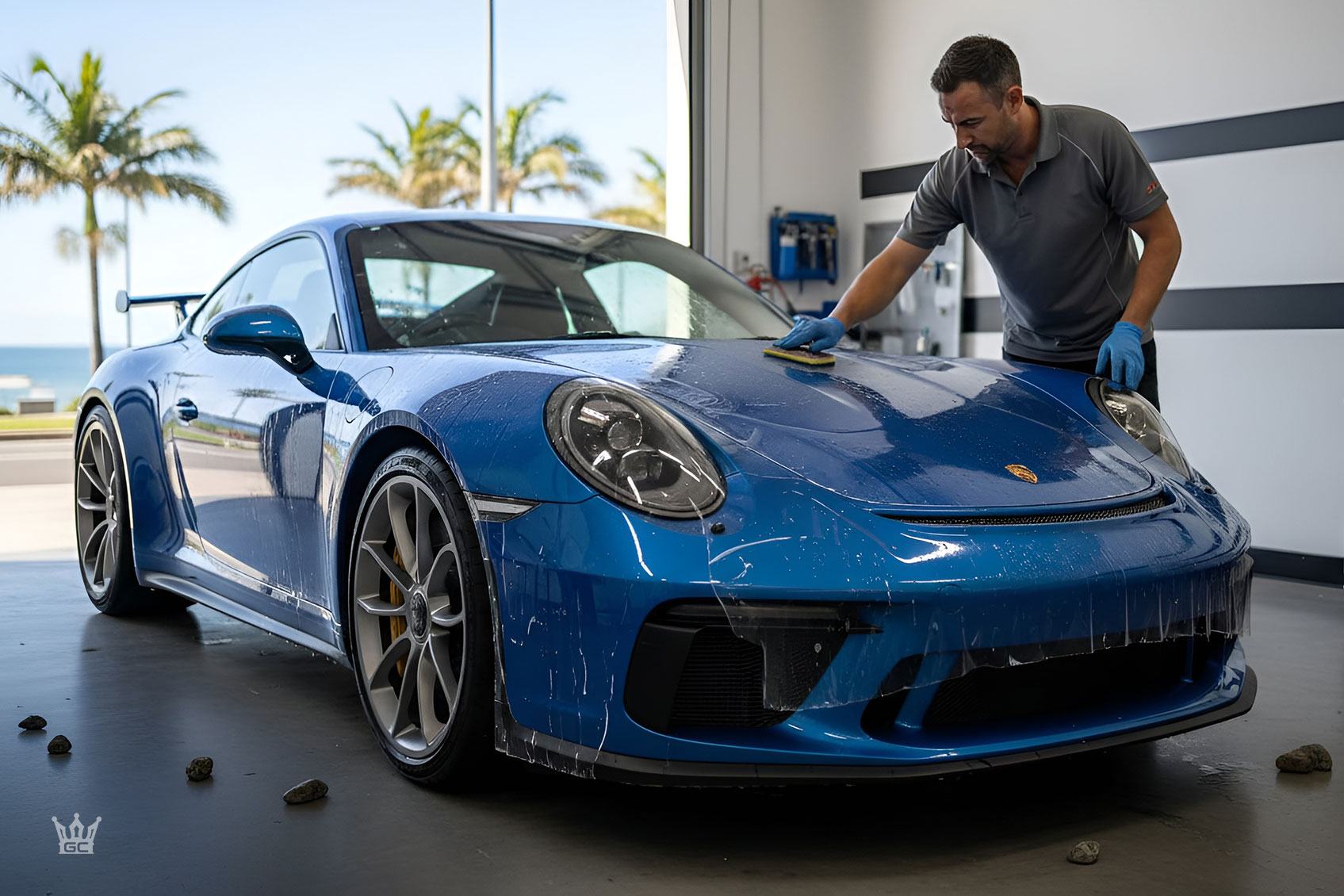
Driving on the beautiful roads around the Gold Coast is a pleasure, but it comes with a constant threat to your car’s paintwork: stone chips. Every journey, especially on the M1, kicks up a barrage of tiny rocks and debris that can leave your front end looking peppered and worn. If you’re tired of seeing new nicks and scratches appear, you’re probably searching for the best stone chip protection available. The definitive answer is Paint Protection Film (PPF). This proven solution exists to keep your car’s finish looking flawless.
This guide will walk you through everything you need to know about paint protection film (PPF), the undisputed champion of paint preservation.
The Ultimate Shield: Why Paint Protection Film is the Best Stone Chip Protection
When it comes to providing a real, physical barrier against impacts, nothing beats Paint Protection Film, often called PPF or clear bra. PPF is a durable and transparent urethane film applied directly to your vehicle’s painted surfaces.
Originally developed for the US military to protect helicopter rotor blades from debris during the Vietnam War, this technology has been perfected for automotive use. Modern PPF is a multi layered marvel, typically 6 to 10 mils thick, that acts as a sacrificial shield. Once professionally installed, this high tech film is virtually invisible, absorbing the impact from rock chips, bug splatter, and road tar while protecting your paint from UV exposure.
Finding Your Perfect Fit: PPF Coverage Options
The best stone chip protection strategy depends on your car, your driving habits, and your budget. Luckily, PPF is not an all or nothing solution. You can choose the level of coverage that makes the most sense for you with our PPF packages.
Full Body PPF: The Ultimate Armor
As the name suggests, full body PPF involves wrapping nearly every painted panel of your vehicle. This comprehensive approach provides 360 degree protection, ensuring everything from your front bumper to your door edges and rear quarter panels is safe from harm. A full wrap is the best way to maintain original factory paint condition, which can significantly boost your car’s resale value. While it’s a bigger investment, the peace of mind knowing every inch is protected from rogue shopping carts and gravel roads is priceless.
Front End PPF: Smart, Targeted Protection
Since the front of your car is where most road-related paint damage occurs, a front end PPF package, or “full front”, is a hugely popular and cost effective choice. It focuses on the highest risk areas, including:
-
The entire front bumper
-
The leading portion of the hood and fenders
-
Side mirrors
-
Headlights
This setup provides the best stone chip protection right where you need it most, shielding your car’s face from the constant assault of highway driving. For many drivers on the Gold Coast, this is the ideal balance of protection and value.
High Impact Area Coverage: A Custom Approach
Beyond a standard front end package, you can create a custom plan to protect other vulnerable spots. High impact areas are the parts of your car most likely to get hit. Think about the rocker panels along the bottom of your doors, the area behind your wheel wells, and even the top of the rear bumper where you might load and unload cargo. By strategically applying PPF to these specific zones, you get an efficient and targeted defense against damage. At Gold Coast Wrap Kings, we can help you identify your car’s unique high risk areas for a truly tailored protection plan. See real examples in our PPF project gallery.
Understanding Modern PPF Technology
Not all PPF is created equal. Today’s films are packed with incredible features that make them more durable and user friendly than ever before.
The Magic of Self Healing PPF
One of the most amazing features of modern PPF is its ability to self heal. The film is engineered with an elastic topcoat that can repair minor scratches and swirl marks all by itself. When exposed to a little heat from the sun or warm water, the film’s surface relaxes and flows back to its original smooth state, making light scuffs from car washes literally disappear. It’s important to know this won’t fix a deep gouge or a puncture from a large rock, but for the everyday wear and tear, it keeps the film looking glossy and new for years.
Clear Gloss PPF: The Invisible Shield
Clear gloss PPF is the industry standard and what most people think of when they hear “clear bra”. It’s designed to be optically transparent and virtually invisible once applied. Gone are the days of films that would yellow or crack over time. Modern, high quality clear films are UV resistant and incredibly stable, often coming with 10 or 12 year warranties against discoloration. A gloss PPF not only protects your paint but can even enhance its shine, giving it a deeper, “wetter” look.
Matte PPF: Style Meets Durability
If you love the stealthy, non reflective look of a satin finish, matte PPF is for you. See our guide on choosing satin vs gloss PPF for Tesla Model Y. This film provides the exact same tough, self healing protection as its glossy counterpart but transforms your car’s appearance. You can apply it over your glossy paint to get a complete matte makeover without an expensive and permanent paint job. Alternatively, if your car already has a factory matte finish, matte PPF is an absolute necessity. Matte paint cannot be polished or repaired easily, so film is the only way to truly protect it from damage.
Specialized Solutions for Every Need
The world of paint protection extends beyond daily drivers. There are specialized films and applications designed for specific uses.
4×4 Off Road PPF for the Adventurous
Taking your 4×4 through the bush presents a unique set of challenges. Scraping branches create “bush pinstripes” and unsealed roads throw up heavy gravel. Off road PPF is the best stone chip protection for adventurers. This often involves using thicker films (up to 12 mils) for extra durability. Protecting the fender flares, rocker panels, and doors can prevent costly paint correction after a weekend on the trails. For Queensland explorers, a quality PPF application means you can tackle rugged terrain with confidence. Gold Coast Wrap Kings even offers custom bush wrap kits for those preparing for their next big trip.
Don’t Forget the Glass: Windshield Protection Film
That sudden crack from a pebble hitting your windshield is a feeling every driver dreads. Windshield protection film is a transparent layer applied to the outside of your windscreen to absorb these impacts. It can make your glass several times more resistant to chipping and cracking. If the film gets damaged, it can be peeled off and replaced for a fraction of the cost of a new windshield, which is especially important for modern cars with expensive sensors and cameras embedded in the glass. If you drive an EV like a Tesla, choose an installer experienced with these ADAS components.
Common Alternatives and Why They Fall Short
When searching for the best stone chip protection, you’ll encounter other products like vinyl wraps and ceramic coatings. See our detailed comparison: Paint Protection Film vs Ceramic Coating. While great in their own right, they are not designed for impact resistance.
Vinyl Wrap vs. PPF for Stone Chip Protection
A vinyl wrap is a fantastic tool for changing your car’s color and style. Explore our car wrap options. However, it is a thin PVC film (about 3 to 4 mils thick) designed for aesthetics, not impact protection. PPF is a much thicker polyurethane film (6 to 10 mils) engineered to be elastic and dissipate energy. A rock that would tear a vinyl wrap will often bounce right off PPF. If your primary goal is preventing chips, PPF is the only choice.
The Limitations of Ceramic Coatings
Ceramic coatings are a liquid polymer that creates a super slick, glossy, and chemical resistant layer on your paint. They are amazing for making your car easier to clean and protecting it from UV rays. However, a ceramic coating is incredibly thin, adding up to 2 microns per layer. For comparison, PPF is about 150 microns thick, while ceramic coatings are about 1 micron thick. This microscopic layer simply cannot absorb the force of a flying stone. The best approach is to use both products together: apply PPF to high impact areas and then add a ceramic coating on top of the entire car for the ultimate combination of protection and gloss.
Understanding the Enemy: The Reality of Highway Stone Chip Risk
Driving at 100 km/h on the highway turns tiny stones into high velocity projectiles. The front of your car bears the brunt of this assault, which is why the vast majority of chips and pitting happen during high speed driving. Following trucks and driving through construction zones dramatically increases your risk. While keeping a safe distance helps, you can’t dodge every piece of debris. This constant threat is why PPF was first adopted by race car drivers, whose vehicles faced extreme conditions. For the everyday commuter, a front end PPF installation is the most practical and effective defense against this unavoidable risk.
If you’re ready to equip your vehicle with the best stone chip protection on the market, the team at Gold Coast Wrap Kings is here to help. Contact us today for a personalized quote and drive with confidence knowing your paint is perfectly preserved.
Frequently Asked Questions About the Best Stone Chip Protection
Without a doubt, high quality Paint Protection Film (PPF) is the best stone chip protection available. Its thickness, durability, and self healing properties provide a physical barrier that other products like ceramic coatings and vinyl wraps cannot match.
No. While ceramic coatings offer excellent resistance to chemicals and UV rays, they are far too thin to absorb the impact of a stone. PPF is the only solution designed specifically for impact resistance.
The cost varies widely depending on the level of coverage (e.g., front end vs. full body), the size and complexity of your vehicle, and the type of film used. For an accurate price for your car, it’s best to get a quote from a professional installer.
For owners of high value vehicles, new cars, or anyone who wants total peace of mind, full body PPF is absolutely worth it. It preserves the entire factory finish, maximizes resale value, and protects against all forms of everyday damage, not just frontal impacts.
Premium, professionally installed PPF is incredibly durable. Most top tier films come with warranties of 10 years or more and are designed to last for the long haul without yellowing, cracking, or peeling.
No, quite the opposite. PPF is designed to protect your paint. It bonds with a safe, automotive grade adhesive and can be removed by a professional years later without leaving any residue, revealing the perfectly preserved paint underneath.