
TL;DR
Full front PPF protects your bonnet, bumper, fenders, mirrors, and headlights, covering roughly 80% of where rock chip damage actually happens. Full body PPF wraps every painted panel from bumper to bumper, offering complete protection but at roughly double to triple the price. Most owners choose full front PPF paired with ceramic coating on the rest of the car as the best value combination. Your ideal coverage depends on vehicle value, ownership plans, paint colour, and how you drive.
What Is Paint Protection Film?
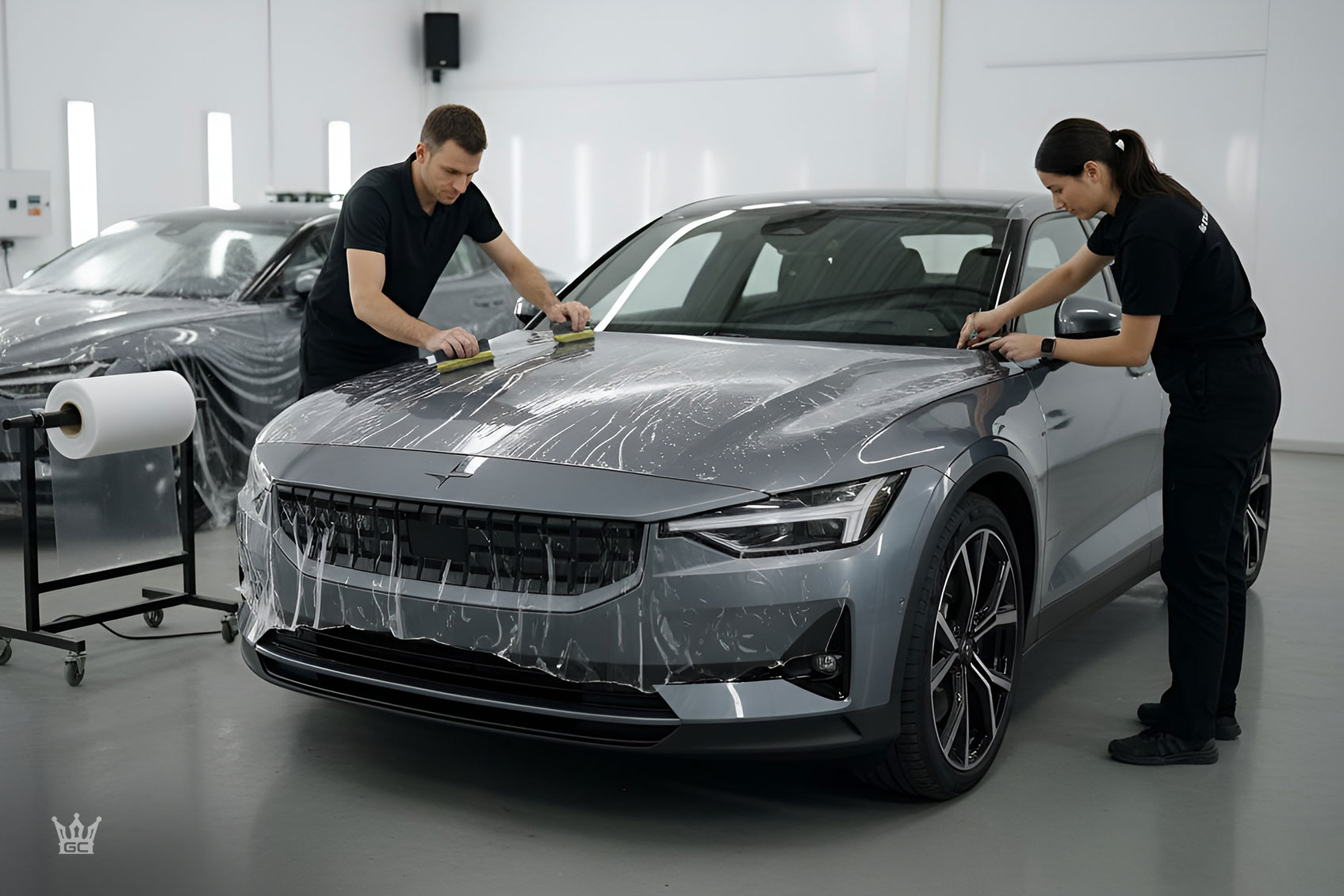
Paint protection film (PPF) is a transparent thermoplastic polyurethane (TPU) film applied to painted surfaces to absorb impacts from stones, road debris, bug acid, bird droppings, and UV rays. Modern PPF uses a three-layer structure: a hydrophobic topcoat that repels water and contaminants, a TPU impact layer that absorbs physical damage, and an adhesive layer that bonds to the paint without damaging it.
The topcoat on premium films is self-healing. When the surface picks up light scratches, heat from sunlight or warm water causes the molecules in the topcoat to rearrange, effectively erasing the mark. This is not marketing spin. It works reliably on swirl marks and light abrasions, though deep gouges that penetrate the TPU layer won’t self-repair.
PPF comes in clear (gloss), satin (sometimes called “stealth”), and coloured finishes. Most installations use clear film to keep the factory paint appearance intact, but satin PPF has grown popular for converting gloss paint to a matte finish while adding protection. For a deeper look at the material itself, the guide to what paint protection film is and how it works covers the fundamentals.
PPF Coverage Levels Defined
The question of full front or full body PPF only tells part of the story. There are actually four common coverage tiers, and understanding each one helps you spend your budget where it counts.
Partial Front PPF
Partial front coverage protects the bumper, headlights, mirror caps, and the leading 18 to 24 inches of the bonnet. It’s the entry point for owners on a budget, typically running AUD $1,200 to $1,800.
The limitation is practical and cosmetic. The film ends partway across the bonnet, creating a visible edge line. Multiple owners on forums like Challengertalk and TaycanForum report that this line bothers them over time, especially on dark paint, and many end up upgrading to full front within a year or two. If you can stretch the budget even slightly, full front eliminates this problem entirely.
Full Front PPF
Full front PPF covers the full bumper (edges wrapped), full bonnet (edge to edge), both front fenders (wrapped to the door gap), side mirrors, headlights, and fog lights. These panels face the brunt of highway driving. Stones, sand, salt, and insects all hit the front of the car first.
Here’s the stat that matters most: full front PPF addresses approximately 80% of rock chip damage locations. It’s the most popular PPF package across the industry, accounting for roughly 60% of all installs. In Australia, full front PPF typically costs between AUD $1,500 and $4,000 depending on the vehicle and film brand.
Track Pack / Extended Front
The track pack sits between full front and full body. It includes everything in the full front package plus rocker panels, A-pillars, door edges, door cups, and the rear bumper. Some shops also add the leading edge of the roof.
This tier suits owners who want more than front protection but don’t need every panel covered. It’s particularly useful for vehicles that see gravel roads, tight car parks, or occasional track days. Australian pricing generally falls in the AUD $3,500 to $5,400 range.
Full Body PPF
Full body PPF covers every painted surface: everything in the full front package plus all doors, rear fenders and quarter panels, roof, boot lid, rear bumper, A-pillars, and rocker panels. It’s complete protection from every angle.
Full body installations in Australia typically cost AUD $7,600 to $10,700 for clear film, with satin and specialty finishes pushing past $15,000 on larger vehicles. Installation takes three to five days because of the prep work, panel count, and curing time required. The Corvette Stingray project is a good example of what full body ultra-clear self-healing PPF looks like on a performance vehicle built for track use.
Coverage Comparison at a Glance
|
|
Partial Front |
Full Front |
Track Pack |
Full Body |
|---|---|---|---|---|
|
Panels |
Bumper, partial bonnet, headlights, mirrors |
Full bumper, full bonnet, fenders, mirrors, headlights, fogs |
Full front + rockers, A-pillars, door edges, rear bumper |
Every painted panel |
|
Rock chip protection |
~50-60% |
~80% |
~90% |
100% |
|
Install time |
Half day |
1 day |
1-2 days |
3-5 days |
|
AUD cost range |
$1,200-$1,800 |
$1,500-$4,000 |
$3,500-$5,400 |
$7,600-$10,700+ |
|
Best for |
Tight budgets, short-term ownership |
Most daily drivers |
Enthusiasts, gravel roads, light track |
Luxury, long-term keepers, dark paint, show vehicles |
Full Front vs Full Body PPF: Key Differences
When deciding between full front or full body PPF, cost is the obvious difference, but it’s not the only one.
Protection scope. Full front handles roughly 80% of impact damage. Full body handles 100%. That remaining 20% includes door dings from car parks, scratches along rear quarter panels from hedges or shopping trolleys, and stone chips thrown by the rear wheels of the car ahead of you in the next lane.
Cost. Full front runs about 30 to 40% of the full body price. For many owners, that gap is significant. One Bimmerpost user captured the common dilemma: “I am debating should I do full PPF or front only. The price is drastically different. Entire vehicle, $6,500. Full front only is roughly half.” The financial maths change depending on what the car is worth and how long you plan to keep it.
Installation time. Full front is typically a one-day job (four to eight hours of active work). Full body requires three to five days including prep, application, curing, and final inspection. That’s three to five days without your car.
Appearance consistency over time. This is the factor most people overlook. With full front PPF, the protected panels retain their original gloss and colour depth while unprotected panels gradually fade from UV exposure. Over three to five years, this creates a visible mismatch. The High Cool industry guide flags this as a real concern, and practitioners confirm it’s especially noticeable on dark vehicles. In Queensland, where UV exposure is among the highest in the world, this differential aging happens faster.
Edge visibility. Professional full front installs wrap film edges into panel gaps, making transitions nearly invisible. But there’s always a boundary between protected and unprotected panels at the fender-to-door seam. Full body PPF eliminates this entirely because there’s no transition point.
How to Decide: A Practical Framework
Choosing between full front or full body PPF comes down to five factors. None of them involve guesswork.
Vehicle Value
For vehicles under $50,000, full front PPF protects the highest-risk areas at a price that makes financial sense relative to the car’s value. Between $50,000 and $100,000, consider adding the track pack or extending to full body if the budget allows. Above $100,000, full body is hard to argue against. A single respray panel on a luxury vehicle can cost $2,000 or more, and stone chips on a Ferrari or AMG are not just cosmetic problems, they’re value destroyers.
For owners weighing all their options on a new vehicle, the guide to best paint protection options for a new car walks through the full picture.
Ownership Horizon
If you’re leasing or plan to sell within two to three years, full front PPF is the pragmatic choice. You’ll protect the areas buyers notice most (bonnet and bumper condition) without over-investing. If you’re keeping the car five years or longer, full body pays for itself by preventing cumulative damage across every panel and maintaining resale value.
As one installer noted in a YouTube walkthrough that now ranks for this topic: full body is a waste for vehicles under $60K with short ownership horizons but essential for exotic and luxury long-term holds.
Paint Colour
Dark colours punish you for every mark. Black, dark blue, deep grey, and solid reds show swirl marks, scratches, and stone chips far more visibly than light metallics or white. Owners on detailing forums consistently recommend broader PPF coverage for dark vehicles. If you have a black car you plan to keep for years, full body PPF will save you from a lifetime of frustration at every wash.
Driving Environment
Highway commuters face the most rock chip risk on front panels, making full front the priority. But Gold Coast and South East Queensland drivers deal with a unique combination of M1 motorway debris, hinterland gravel roads, and coastal salt exposure. Utes and 4x4s that leave the bitumen regularly take punishment on rocker panels and lower body panels that full front PPF simply doesn’t reach. For those vehicles, the off-road paint protection guide is worth reading.
Parking Situation
Garaged vehicles face less ambient damage and can get by with full front coverage in most cases. Street-parked vehicles, especially in busy suburbs or shopping centre car parks, are exposed to door dings, trolley scrapes, and fallen branches. Full body or at least an extended track pack makes more sense here.
The Upgrade Path: Starting With Full Front and Adding Later
Yes, you can start with full front PPF and add more panels later. This is a common approach for owners who want protection now but can’t commit to the full body price upfront.
There are trade-offs to know about. Each additional session involves a separate setup cost, so doing it piecemeal costs more overall than doing it all at once. There’s also the possibility of film age mismatch: PPF installed two years apart may not look identical, especially if the original film has yellowed slightly or the manufacturer has updated the product line.
The honest advice: if full body fits your budget, do it in one go. If it doesn’t, full front is far better than nothing. You’re still covering 80% of the damage risk, and you can always expand coverage when finances allow.
Full Front PPF Plus Ceramic Coating: The Most Popular Combo
Practitioners on Reddit’s r/Detailing community consistently land on the same recommendation: “Full front with a ceramic coating on the whole car should suffice. You can always add more later if you feel the need.” This combination shows up as the dominant real-world approach across enthusiast forums for BMW, Porsche, Toyota, and Tesla owners alike.
The logic is straightforward. PPF handles physical impact protection where it matters most (the front). Ceramic coating handles chemical and environmental protection (UV resistance, hydrophobic water beading, easier cleaning) across the entire vehicle, including the panels without film. Together, they cover different threat categories.
This pairing also costs significantly less than full body PPF while delivering strong all-round protection. For a deeper comparison of the two technologies, the breakdown of PPF vs ceramic coating explains where each one excels.
Why Coverage Choice Matters More in Queensland
Queensland’s climate makes the full front or full body PPF decision more consequential than it would be in Melbourne or Hobart.
The UV index on the Gold Coast regularly hits extreme levels during summer. Unprotected paint fades and oxidises faster here than in southern states, which accelerates the visual mismatch between PPF-protected panels and bare panels. If you only protect the front, your bonnet and fenders could look noticeably fresher than the doors and boot within a few years.
Road conditions add their own pressures. The M1 and Pacific Motorway funnel gravel and road debris at highway speeds. Hinterland roads scatter loose stone. Salt air along the coast attacks clear coat. For 4x4s and utes that venture off sealed roads, lower body panels cop the worst of it.
These local conditions don’t automatically mean every Gold Coast car needs full body PPF. But they do mean the aging and damage risks that front-only coverage leaves exposed are amplified compared to drier or lower-UV regions.
Satin PPF: A Finish Worth Knowing About
Most PPF discussions focus on clear gloss film, but satin (or stealth) PPF deserves its own mention. Satin PPF converts gloss factory paint into a matte or satin finish while providing the same impact and UV protection as clear film. It’s a two-in-one solution: aesthetic transformation plus protection.
Satin PPF has become especially popular on EVs and performance vehicles. Tesla owners, in particular, gravitate toward the satin look as a way to differentiate from the standard gloss finishes. The Tesla Model X project in satin PPF shows what a full satin wrap looks like on an EV with complex panel geometry and gull-wing doors.
Satin PPF works for both full front and full body applications. The cost premium over clear PPF is real (colour and specialty finishes typically add 15 to 30%), but for owners who want the matte look without repainting, it eliminates the need for a separate colour-change wrap. The satin vs gloss PPF decision guide for Tesla Model Y breaks down the finish comparison in more detail.
Pre-Cut Patterns vs Bulk Installation
PPF can be installed using pre-cut patterns (digitally plotted from a vehicle-specific template) or bulk film (hand-cut on the car). Pre-cut patterns provide consistency and precision because every edge is plotted to match your exact make and model. They also reduce installation time and the risk of blade marks on the paint during trimming.
Bulk installation gives the installer more flexibility for custom coverage areas or vehicles that don’t have patterns available, but it depends heavily on the technician’s skill. For standard coverage levels (full front, full body), pre-cut patterns are the industry standard at reputable shops.
Do EVs and Teslas Need More PPF?
Tesla and BYD owners face a specific paint vulnerability. Owners across all Tesla models frequently report thinner, softer paint than traditional automotive finishes. This makes the clear coat more susceptible to stone chips, even at moderate speeds.
Specialist installers confirm this. Some shops report seeing more rock chip damage on Teslas than any other brand, making full front PPF essentially non-negotiable for Tesla commuters. For owners investing in a BYD or Tesla on the Gold Coast, the EV portfolio shows PPF and wrap work across several EV models and the panel challenges unique to each.
Whether to go full front or full body on an EV depends on the same factors as any other vehicle: value, ownership duration, colour, and driving conditions. But because the paint is thinner at baseline, the case for broader coverage is stronger.
Frequently Asked Questions
Most high-quality PPF lasts five to ten years depending on driving conditions, climate, and maintenance. Premium brands like XPEL, 3M, SunTek, and STEK commonly offer seven to ten year warranties. In Queensland’s high-UV environment, staying on top of PPF cleaning and maintenance helps maximise that lifespan.
Yes. PPF is designed for clean removal. The adhesive releases from properly prepared paint without leaving residue or pulling clear coat. This makes PPF a reversible protection option, unlike paint sealants that bond permanently.
With professional installation that wraps film edges into panel gaps, the transitions are nearly invisible to the casual observer. The film-to-paint boundary sits at natural panel seams (fender to door, bonnet to fender), which disguises the edge. The only scenario where edges become obvious is partial bonnet coverage, where the film ends in the middle of a flat panel.
It depends on three things: what the car is worth, how long you plan to keep it, and what colour it is. For a $40,000 white hatchback on a three-year finance term, full front is the better investment. For a $90,000 black SUV you plan to keep for seven years, full body will likely pay for itself in avoided paint corrections and maintained resale value.
In Australia, full front PPF generally runs AUD $1,500 to $4,000 while full body ranges from AUD $7,600 to $10,700 or more depending on vehicle size and film type. Satin and specialty finishes push full body costs higher. The gap is significant, which is exactly why the “full front plus ceramic coating” combination has become so popular as a middle path.
Absolutely. Adding panels later is common. Just know that two separate installations cost more in total than doing everything at once, and there may be slight visual differences between film applied at different times. If you’re on the fence, starting with full front PPF gives you 80% of the impact protection right away.
They solve different problems. PPF physically absorbs impacts (stones, scratches, debris). Ceramic coating creates a chemical barrier against UV, water spots, bird droppings, and makes the car easier to wash. Most protection-focused owners use both: PPF on high-risk panels, ceramic coating everywhere else.
Full front PPF typically takes one day (four to eight hours of active work). Full body PPF requires three to five days including surface preparation, film application, curing, and quality inspection.
Making Your Decision
The full front or full body PPF question doesn’t have a single right answer. It has the right answer for your situation. If you drive a daily commuter with light-coloured paint and a standard ownership term, full front PPF covers the highest-risk panels at a reasonable cost. If you own a dark-coloured luxury vehicle, plan to keep it long term, or simply want zero compromises on protection, full body is the way to go.
Either way, doing something is dramatically better than doing nothing. A single bonnet respray costs $1,200 to $2,500. A headlight replacement runs $800 to $2,500 per side. Full front PPF pays for itself the first time a piece of gravel hits your car at 110km/h on the M1.
To work out the right coverage level for your specific vehicle and situation, get in touch for a personalised recommendation, or browse the PPF options available on the Gold Coast to see what each tier includes.