
TL;DR
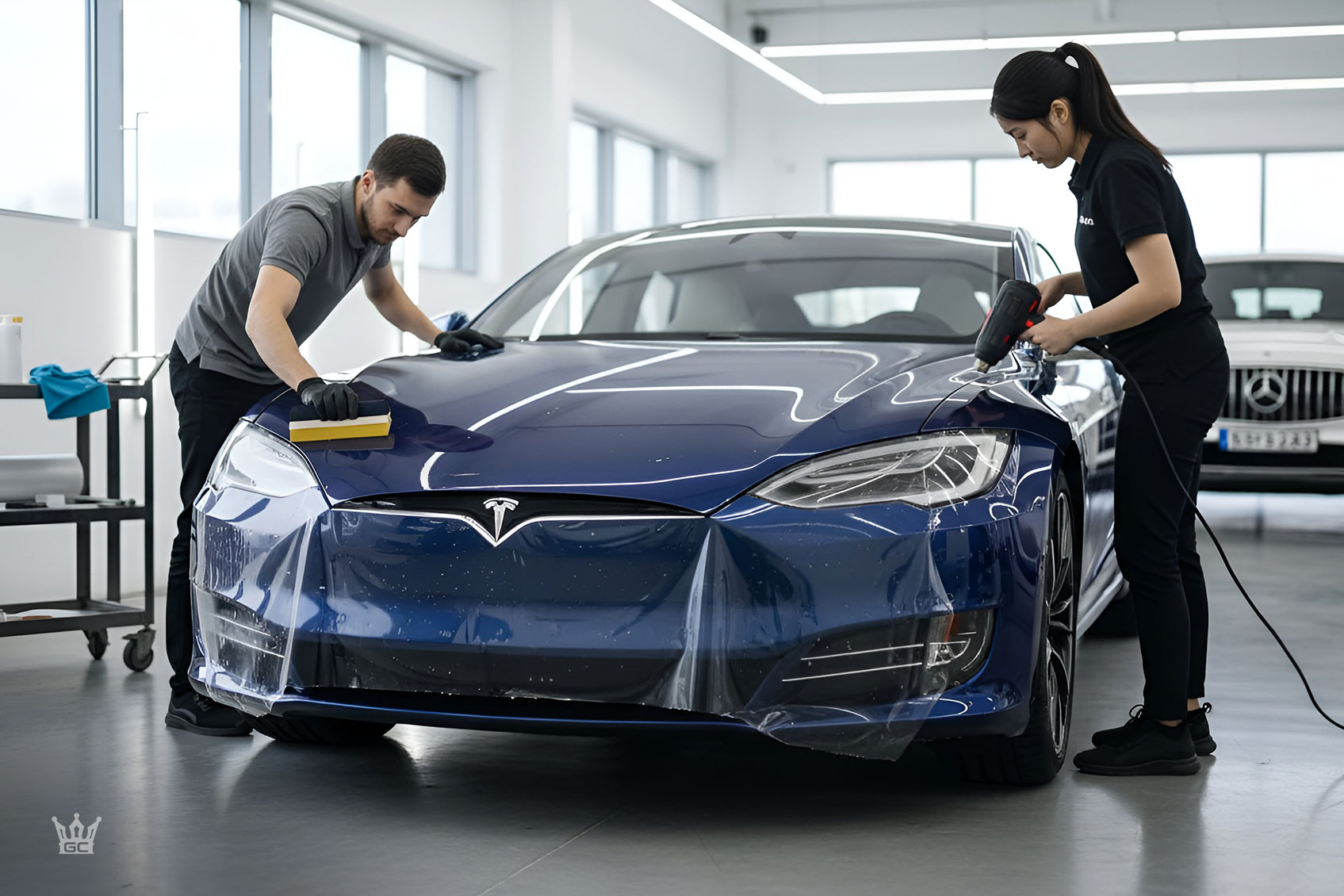
PPF stands for Paint Protection Film, a clear thermoplastic urethane layer applied to your car’s painted surfaces to shield against stone chips, scratches, and UV damage. It lasts 5 to 10 years, costs between $2,000 and $10,000+ in Australia depending on coverage, and is the only product that physically absorbs impact. Premium films self-heal minor scratches with heat from sunlight.
You’ve probably seen “PPF” mentioned at a dealership, on a detailing quote, or in a car forum and wondered what it actually means. PPF on a car refers to Paint Protection Film, a nearly invisible urethane film bonded to your vehicle’s paint to stop rock chips, scratches, bug acid, and UV rays from reaching the surface underneath.
Think of it as body armour for your paint. You can’t see it, but it takes the hits so your clear coat doesn’t have to.
This guide breaks down what PPF is made of, the different types available, what it costs, how it compares to ceramic coating and vinyl wraps, and who benefits most from it. If you’re trying to figure out whether PPF on your car makes sense, everything you need is here.
What Does PPF Stand For?
PPF stands for Paint Protection Film. You’ll also hear it called clear bra (especially in the US and increasingly in Australia), clear film, stone chip film, or, if you’re talking to someone who knows the history, helicopter tape.
That last nickname isn’t random. During the Vietnam War, the US military asked 3M to develop a lightweight, transparent film to protect helicopter rotor blades from shrapnel and debris. Replacing a thin film was far cheaper than replacing damaged rotors, and the military adopted it quickly. Over the following decades, the technology migrated to motorsport, then to everyday automotive use. Today, virtually every car manufacturer approves PPF for their vehicles.
For a deeper look at how PPF coverage works across different panels and what ongoing care involves, the complete guide to PPF coverage and care walks through the details.
What Is PPF Made Of?
The dominant material in modern PPF is thermoplastic polyurethane (TPU). It accounts for over 82% of the global PPF market, and for good reason: TPU is the only PPF material that genuinely self-heals.
The Four-Layer Structure
A quality PPF film isn’t a single sheet. It’s built in layers, each with a specific job:
-
Release liner (removed during installation, like a sticker backing)
-
Adhesive layer that bonds the film to your car’s paint
-
TPU core layer that absorbs impact energy from stones, gravel, and debris
-
Clear coat / top coat that provides gloss, hydrophobic water repellency, and self-healing properties
Standard automotive PPF runs about 7.5 to 8 mil thick (roughly 0.2mm). That’s significantly thicker than vinyl wrap film (3 to 4 mil), which is why PPF absorbs physical impacts that vinyl simply can’t.
What About Cheaper Alternatives?
Two other materials show up in budget films:
-
TPH (Thermoplastic Polyolefin): Cheaper than TPU. Reasonable clarity, but no self-healing capability.
-
PVC: The budget option. Rigid, prone to yellowing, and generally not worth using on a car.
If a quote seems surprisingly cheap, ask what material the film uses. TPU costs more for a reason.
How Self-Healing Works
Self-healing is probably the single feature that surprises people most about PPF on cars. When the film’s top coat gets a light scratch or swirl mark, heat allows the elastomeric polymers to reflow and fill the scratch. Direct sunlight for 15 to 30 minutes will do it. So will warm water (around 60°C) or a heat gun.
This works on surface-level scratches, not deep gouges that cut through the film. But for the kind of everyday marks that accumulate from washing, light brush contact, or fingernails near door handles, the film genuinely repairs itself.
All four major premium brands (XPEL Ultimate Plus, STEK DYNOshield, Llumar Valor, and 3M Scotchgard Pro) include self-healing in their top-tier films.
Types of PPF
PPF isn’t just one product anymore. The category has expanded considerably:
Clear / Gloss PPF
The most popular option. Virtually invisible once installed, it preserves your factory paint’s original look while adding a protective barrier. This is what most people picture when they think of PPF on a car.
Satin / Matte PPF
A growing trend, especially among Tesla and luxury vehicle owners. Satin PPF converts a gloss paint finish into a matte or satin look while still providing full physical protection. It’s a two-in-one: appearance change plus impact resistance. If you’re weighing finishes, the satin vs gloss PPF decision guide for Tesla Model Y covers the trade-offs in detail.
Coloured PPF
An emerging category that combines a colour change with physical protection. Unlike vinyl wraps (which change colour but offer minimal impact resistance), coloured PPF gives you both in a single layer. Brands like STEK lead this space.
Off-Road / 4×4 PPF
Heavier-duty films and coverage patterns designed for vehicles that face bush pinstriping, gravel roads, and mud. For 4×4 owners, the off-road paint protection guide covers what to protect and why.
Where Is PPF Applied on a Car?
PPF doesn’t have to cover every panel. Most shops offer tiered coverage packages based on where your car takes the most punishment.
Partial / Full-Front Coverage
This covers the areas that absorb roughly 80% of road debris damage:
-
Full or partial bonnet (hood)
-
Front bumper
-
Front fenders (partial)
-
Side mirrors
-
Headlights (optional)
Installation typically takes 1 to 2 days. This is the most popular package for daily drivers.
Full-Body Coverage
Every painted panel, bumper to bumper. Best suited for luxury vehicles, sports cars, or owners who plan to keep the car long-term and want maximum resale protection. Installation runs 10 to 15 hours, usually spread across several days.
An important note from real-world experience: practitioners on a 4Runner forum report that dealer-installed (port) PPF often provides minimal coverage with visible seams across the bonnet. Aftermarket PPF installed by a specialist shop uses higher-quality film, better templates, and wraps edges more cleanly. Dealer PPF and professional aftermarket PPF are not the same thing.
You can browse real PPF project examples to see what full-front and full-body coverage looks like on different vehicles.
PPF vs Ceramic Coating
This is the most common point of confusion. They’re not interchangeable, and they protect against different things.
|
Factor |
PPF |
Ceramic Coating |
|---|---|---|
|
Protection type |
Physical barrier (absorbs stone chips, scratches) |
Chemical barrier (repels UV, water, contaminants) |
|
Impact protection |
Yes |
No |
|
Hydrophobic effect |
Moderate (some films) |
Strong |
|
Typical cost (AU) |
$2,000 to $10,000+ |
$500 to $2,000 |
|
Lifespan |
5 to 10 years |
2 to 5 years |
|
Can combine? |
Yes, and you should |
Yes, apply over PPF |
PPF stops physical damage. Ceramic coating doesn’t. A ceramic coating is a liquid-applied chemical layer that repels water, dirt, and UV rays, but it cannot absorb the energy from a stone chip. If rock protection matters, ceramic coating alone won’t cut it.
The gold standard approach is ceramic coating applied over PPF. You get the physical barrier from the film and the hydrophobic, easy-clean properties from the ceramic. Practitioners on Australian forums and Facebook car groups consistently recommend this combination, with PPF on the high-impact front end and ceramic on the rest of the car at minimum.
For a full breakdown of the differences, see the PPF vs ceramic coating comparison.
PPF vs Vinyl Wrap
Another common mix-up, but the purpose of each product is fundamentally different.
|
Factor |
PPF |
Vinyl Wrap |
|---|---|---|
|
Primary purpose |
Paint protection |
Colour/appearance change |
|
Transparency |
Clear (or satin/matte) |
Opaque, changes colour |
|
Thickness |
7.5 to 8 mil |
3 to 4 mil |
|
Self-healing |
Yes (premium TPU) |
No |
|
Impact protection |
Strong |
Minimal |
PPF protects. Vinyl transforms. If you want a colour change, a vinyl wrap is the right tool. If you want to stop stone chips, PPF is the answer. Coloured PPF is the only product that does both, though its colour range is still more limited than vinyl.
How Long Does PPF Last?
Quality paint protection film on a car lasts between 5 and 10 years. All four major premium brands (XPEL, STEK, Llumar, 3M) offer 10-year manufacturer warranties on their flagship films.
What affects longevity:
-
UV exposure: The Gold Coast’s intense sun accelerates degradation in lower-quality films. Premium TPU films with UV-stabilised top coats handle this far better.
-
Maintenance: Regular washing and avoiding harsh chemicals extends film life. Here’s a guide on how to clean and maintain PPF properly.
-
Film quality: TPU outlasts TPH and PVC by a significant margin.
-
Installation quality: Poor installation leads to edge lifting, bubbling, and premature failure. The installer matters as much as the film.
When the film eventually reaches end of life, it can be safely removed by a professional using heat without damaging the paint underneath. The paint should be in the same condition as when the film was first applied.
What Does PPF Cost in Australia?
Pricing varies based on vehicle size, film brand, coverage area, and panel complexity. Here are current Australian market ranges:
|
Coverage Level |
Approximate Cost (AUD) |
|---|---|
|
Full-front kit |
$1,950 to $2,500+ |
|
Full-body wrap |
$5,500 to $10,000+ |
A compact sedan will sit at the lower end. A large 4×4 or a vehicle with complex curves (think Ferrari or Lamborghini) will push toward the higher end. Satin and coloured PPF films generally cost more than standard clear.
The biggest cost variable isn’t actually the film itself. It’s the labour. PPF installation is a skilled trade. Cutting, fitting, and wrapping edges on compound curves without bubbles, orange peel texture, or lifted edges requires experience. Complex shapes like bonnet scoops, mirror housings, and sensor cutouts are where installer skill really shows.
If you’re weighing up options, get in touch for a quote specific to your vehicle.
Who Should Get PPF on Their Car?
PPF isn’t necessary for every vehicle, but certain owners get outsized value from it:
New car buyers. The ideal time to apply PPF is within the first few weeks of ownership, before the paint picks up any chips or scratches. Once damage exists, it often needs paint correction (polishing) before the film goes on, which adds cost.
Luxury and sports car owners. Preserving factory paint directly supports resale value. A car with chip-free original paint commands a premium over one with touch-up spots.
4×4 and off-road drivers. Bush pinstriping, gravel spray, and trail debris are exactly what PPF was designed to handle. One owner on a 4Runner enthusiast forum reported that full-body XPEL Stealth PPF protected their truck through tight gravel roads and bush pinstriping in a national park. It washed off and looked brand new.
EV owners. Electric vehicles have unique panel shapes, sensor arrays, and camera systems that require installer familiarity. PPF cutouts need to avoid covering ultrasonic sensors, which can impair parking assist and driver-assistance systems. EV instant torque also kicks up more debris from the car ahead, making front-end PPF particularly valuable. For Tesla owners, sensor-safe Tesla wrapping and PPF installation is worth reading.
Daily highway commuters. Freeway speeds turn small pebbles into projectiles. A full-front PPF kit addresses the most vulnerable areas for a relatively modest investment.
For new car owners still deciding between protection options, the best options for new car paint protection guide compares the main choices side by side.
PPF Installation Methods
Two approaches dominate professional PPF installation:
Pre-cut (plotter-cut): Software like XPEL’s DAP system generates templates specific to your vehicle’s make, model, and year. A plotter cuts the film to shape before it goes on the car. This method is precise, repeatable, and eliminates the risk of a blade touching your paint.
Bulk install: The installer works from a roll of film, cutting and shaping it by hand directly on the vehicle. This method wraps edges more cleanly and handles custom work better, but demands higher skill. There’s a small risk of blade marks if the installer isn’t experienced.
Most quality shops use a combination: pre-cut patterns for standard panels, with hand-trimming for complex areas.
Common PPF Issues to Watch For
PPF isn’t perfect. Knowing the potential problems helps you make informed decisions and pick the right installer:
-
Yellowing: Older or cheap films can yellow with UV exposure. Premium TPU films with UV-stabilised top coats resist this, but budget PVC films are notorious for it.
-
Orange peel texture: A bumpy surface that mimics the texture of an orange skin. Usually caused by poor installation or low-quality film.
-
Edge lifting: The film pulls away from panel edges. This is almost always an installation issue.
-
Bubbling: Small bubbles may appear and settle within a few weeks. Large or persistent bubbles indicate poor installation.
-
Visible edges: On partial kits, film edges can sometimes be visible, especially on the bonnet. Full-body coverage eliminates this issue entirely.
Key Terms to Know
If you’re shopping for PPF on a car, these terms will come up:
-
Self-healing: The film’s ability to repair light surface scratches when exposed to heat.
-
Hydrophobic: Water-repelling properties that cause water to bead and roll off the surface.
-
Pre-cut / plotter-cut: Film cut by machine from a digital template before installation.
-
Bulk install: Film cut by hand on the vehicle during installation.
-
TPU (Thermoplastic Polyurethane): The premium film material with self-healing capability.
-
Clear coat: The protective top layer of the film (not to be confused with your car’s factory clear coat).
-
Orange peel: An undesirable bumpy texture caused by poor installation or low-quality film.
The PPF Market Is Growing Fast
For context on where the industry is heading: the global paint protection film market was valued at USD 502.55 million in 2024 and is projected to reach USD 726.63 million by 2030, growing at 6.6% annually. The automotive segment accounts for nearly 74% of that market. PPF is not a niche product anymore. It’s becoming a standard part of new car ownership, particularly for premium vehicles.
Protect Your Car’s Paint Where It Matters
PPF on a car is the most effective way to physically protect paint from the damage that actually happens during normal driving: stone chips, gravel spray, bug acid, bird droppings, and minor scrapes. No other product absorbs impact the way thermoplastic urethane film does. Combined with ceramic coating, it’s the most complete paint protection setup available.
Whether you need a full-front kit for highway commuting or full-body coverage for a luxury vehicle, the right film and the right installer make all the difference. Explore Gold Coast Wrap Kings’ PPF services or request a quote for your specific vehicle.
Frequently Asked Questions
PPF (Paint Protection Film) acts as a transparent physical barrier over your car’s painted surfaces. It absorbs the impact from stone chips, gravel, bug splatter, bird droppings, and minor scratches so your paint doesn’t take the damage. Premium films also self-heal light surface scratches when exposed to heat.
For most new car owners, yes. Applying PPF within the first few weeks of ownership protects factory paint before any damage occurs and avoids the cost of paint correction later. It’s particularly worthwhile for vehicles driven on highways, gravel roads, or in areas with heavy road debris.
A full-front PPF kit (bumper, bonnet, fenders, mirrors) typically runs $1,950 to $2,500+. Full-body PPF coverage ranges from $5,500 to $10,000+ depending on vehicle size, panel complexity, and film brand.
Yes, and it’s considered the gold standard combination. The PPF provides physical impact protection, while the ceramic coating adds hydrophobic properties, UV resistance, and easier cleaning on top of the film.
No. When removed professionally using heat, PPF comes off cleanly without damaging the paint underneath. The paint should look the same as it did when the film was first applied.
Quality PPF lasts between 5 and 10 years. Premium TPU films from major brands carry 10-year manufacturer warranties. Actual lifespan depends on UV exposure, maintenance habits, film quality, and installation quality.
PPF is transparent and designed to protect paint from physical damage. Vinyl wraps are opaque and designed to change a car’s colour or appearance. PPF is roughly twice as thick as vinyl and includes self-healing properties that vinyl lacks. They serve completely different purposes.
Yes, PPF works on any painted vehicle surface. For EVs specifically, installers need to account for sensor arrays, cameras, and unique panel shapes. Covering ultrasonic sensors with film can interfere with parking assist and driver-assistance features, so proper cutouts are essential.